



 28
Apr
Shrink Packaging Roll Solutions for Product Protection
Introduction: Why Smart Packaging Is a Competitive Advantage In today’s highly competitive U.S. market, packaging is no longer...
Customer Stories


Payment Methods
or buy online
| Box Style | All styles available including Reverse Tuck, Sleeve & Tray, Window Boxes, Pop Display Style, Seal End |
| Dimensions | Custom Sizes Available |
| Quantity | 50 |
| Included Options | Gloss/Matte Lamination, Die Cutting, Pre-Scored, Pre-Glued |
| Additional Options | Perforation, PVC Window Patch, Raised Ink, Foil Stamping, Spot UV, Embossing, Debossing. |
| Proof | Flat View, 3D Mock-up, Physical Sampling (Paid Request) |
| Shipping | Shipped via DHL, FedEx & UPS |
| Preferred Design File | You can send us your design files in any vector base format like AI, PDF, PSD, EPS, JPG or TIFF format. |
| Assembling | Pre-Scored, Pre-Glued, & Shipping Flat |

Free Graphics

Eco-Friendly

Environmental Friendly Ink

Short Run

Custom Size & Style

Competitive Price

Fast Turnaround

Free Delivery

Versatile and recyclable, it's a go-to for packaging needs. Affordable, sturdy, and customizable for any product design.

An eco-friendly, durable choice. Ideal for packaging, it's both robust and recyclable. A sustainable solution for your business needs.

Rigid stock material offers superior durability and elegance for packaging. The perfect choice for premium products requiring a luxe feel.

The go-to for shipping needs. Durable, lightweight, and protective, it's the eco-friendly choice for your product's journey.

A touch of luxury for your packaging. This technique adds metallic shine and depth, elevating your product's visual appeal.

Enhance your design with high-shine detail. This technique adds texture and depth, spotlighting key features of your product's packaging.

Amp up your packaging's appeal with its vibrant shine. It enhances color and detail, making your product stand out on the shelves.

Add a futuristic flair to your packaging. It offers a captivating, multi-dimensional shine that catches the eye immediately.

Elevate your packaging with a tactile, 3D effect. It adds a touch of elegance and sophistication, making your brand truly stand out.

Add a unique element to your packaging. This method creates indented detail, lending an understated, chic aesthetic to your product.

This finish provides a smooth and decent dull look, non-reflective surface, adding a touch of elegance to your packaging.

Infuse a touch of luxury into your packaging. It provides a velvety feel to your packaging, making your product irresistible to touch.
From the warehouse shelf to the customer’s door, ecommerce packaging is every protective layer and branded touchpoint that surrounds your product during storage, transit, and delivery — built to cut shipping costs, reduce damage claims, and turn a plain brown box into a brand moment.
|
|
|
|
|
|
|
|
|
|
Most shipping damage and most brand misses happen because sellers treat the box as one decision. It is three.
Primary packaging is direct contact — the wrap, bag, or box that touches your product.
Secondary packaging is the shipper that consolidates units and takes the carrier’s impact.
Tertiary packaging covers palletized bulk for warehouse storage and freight. For most direct-to-consumer businesses, primary and secondary are where the real work happens: a padded insert at the primary level means you can run a lighter secondary without risking breakage.
Getting all three layers right is how you stop paying for returns and start generating unboxing content that works like a moving billboard — without adding dead weight to your DIM charges.
Not every product ships the same way, and using the wrong box format is one of the fastest ways to inflate your per-order cost.
Custom mailer boxes work well for apparel, accessories, and subscription kits where brand presentation matters and the product does not require rigid external protection. A self-locking tab design ships flat and assembles without tape, which speeds up packing lines considerably.
Regular slotted containers (RSCs) and standard shipper boxes handle heavier goods, multi-unit orders, and anything fragile enough to need 2 inches of void fill on every side — a common carrier guideline for damage-prone items. Rigid boxes add a premium unboxing feel for high-value products like electronics or jewelry.
Poly mailers and padded mailers cover soft goods and lightweight items where dimensional weight is the real cost driver. A padded mailer with kraft outer and bubble inner protects adequately while keeping cubic inches low.
Corrugated board is rated two ways: flute profile and edge crush test (ECT). Flute determines cushion and stack strength — E flute (the thinnest) gives a retail-quality surface for print; B flute balances print and protection; C flute is the workhorse for heavier shippers. Double-wall constructions combine two flute layers for orders that absorb real drop-test impact.
ECT 32 covers the majority of standard ecommerce orders. ECT 44 is the threshold for heavier goods or anything that stacks during freight. Kraft board costs less and recycles without treatment; white-lined board gives CMYK printing a cleaner base.
For a deeper look at how flute construction affects your specific product weight, the corrugated shipping boxes page breaks down board options by use case.
How to measure: Record your product’s longest, widest, and tallest points, then add ¼ to ½ inch per side for a snug fit. Fragile items need roughly 2 inches of cushioning clearance on every side.
|
|
|
|
|
|
|
|
|
|
|
|
|
|
|
|
|
|
All sizes above are inside dimensions and represent common industry ranges — your final spec should come from your product’s actual measurements.
Carriers charge whichever is greater: actual weight or dimensional (DIM) weight. The formula is L × W × H ÷ 139 — all three major carriers now use a DIM divisor of 139.
USPS updated its divisor from 166 to 139 on July 12, 2026, and applied DIM weight only above 1,728 cubic inches, with dimensions rounded up to the next whole inch.
Example: A 14 × 12 × 11 in box weighing 3 lb equals 1,848 cubic inches. That calculates to 13.3 lb billable — rounded up to 14 lb. Drop to a 12 × 10 × 6 in box and that same product sits at 720 cubic inches — under the threshold — so it ships at its actual 3 lb. Right-sizing a box is not a packaging decision. It is a freight decision.
Print is where your packaging starts working as marketing. Full CMYK covers photographic and gradient artwork; PMS spot color locks brand colors to an exact ink match across every run.
Matte lamination reads premium and hides fingerprints; gloss catches light on shelf; spot UV adds a tactile raise to logos or patterns.
Inside the box, branded tissue, die-cut inserts, and a QR code pointing to a returns portal or product tutorial add perceived value without adding meaningful weight.
A resealable strip lets customers reuse the box for returns, which reduces inbound damage and cuts your secondary packaging cost on the reverse logistics side.
Running a full print run without a sample approval is how expensive mistakes happen. The standard process starts with a flat dieline for layout review, then a 3D digital proof for structure, then a physical sample before production locks.
For products with a fragile clearance concern, ISTA 3A drop testing simulates the actual shock and vibration your box will see across a carrier network.
Passing an ISTA 3A test before bulk production is significantly cheaper than a damage claim rate that compounds across thousands of shipments.
Single-use corrugated is already one of the most recycled materials in the US supply chain. Sire’s boxes use recyclable board and low-impact water-based inks.
If your brand requires FSC-certified sourcing or specific recycled-content percentages, confirm those claims directly with your account rep before printing certification marks — accurate sustainability claims matter for both compliance and customer trust.
Eco-friendly packaging options are available for brands with documented sustainability commitments.
The MOQ at Sire Printing starts at 50 units — a practical entry point for brands that are still testing skus or managing tight warehouse space.
Most small online shops start with a few hundred boxes and move up as order volume grows, since the per-unit cost drops noticeably between 500 and 1,000 units. If you’re budgeting for a compact shipper, this 4×4×4 corrugated boxes price tier guide shows how pricing shifts at each quantity break.
Production lead times vary by style, finish, and order volume — confirm the timeline for your spec at the quote stage so it fits your restock cycle.
What is ecommerce packaging?
It is every protective and branded layer around a product from the moment it leaves a warehouse to the moment a customer opens it — including primary, secondary, and tertiary packaging stages. The goal is to deliver products undamaged while reinforcing brand identity at the lowest possible shipping cost.
What are the three layers of ecommerce packaging?
Primary packaging contacts the product directly. Secondary packaging is the outer shipper that handles carrier impact. Tertiary packaging covers palletized bulk for freight. Most DTC brands focus on getting primary and secondary right, since those two layers determine both damage rates and unboxing quality.
What box strength do I need for my products?
ECT 32 handles most standard consumer goods shipped via ground. ECT 44 is the right call for heavier items or stacked freight. Add double-wall construction for anything fragile or prone to compression during long transit windows.
How do I avoid DIM weight charges?
Right-size every box to the product. Use the formula L × W × H ÷ 139 and compare the result against actual weight — carriers bill whichever is higher. Dropping from a 14 × 12 × 11 in box to a 12 × 10 × 6 in shipper on a 3 lb product can cut your billable weight from 14 lb to 3 lb.
What is the minimum order quantity?
Sire Printing’s MOQ is 50 units. Pricing per unit decreases as quantities increase — the largest cost reductions typically come between the 500 and 1,000 unit tiers.
28
Apr
Introduction: Why Smart Packaging Is a Competitive Advantage In today’s highly competitive U.S. market, packaging is no longer...
 29
Apr
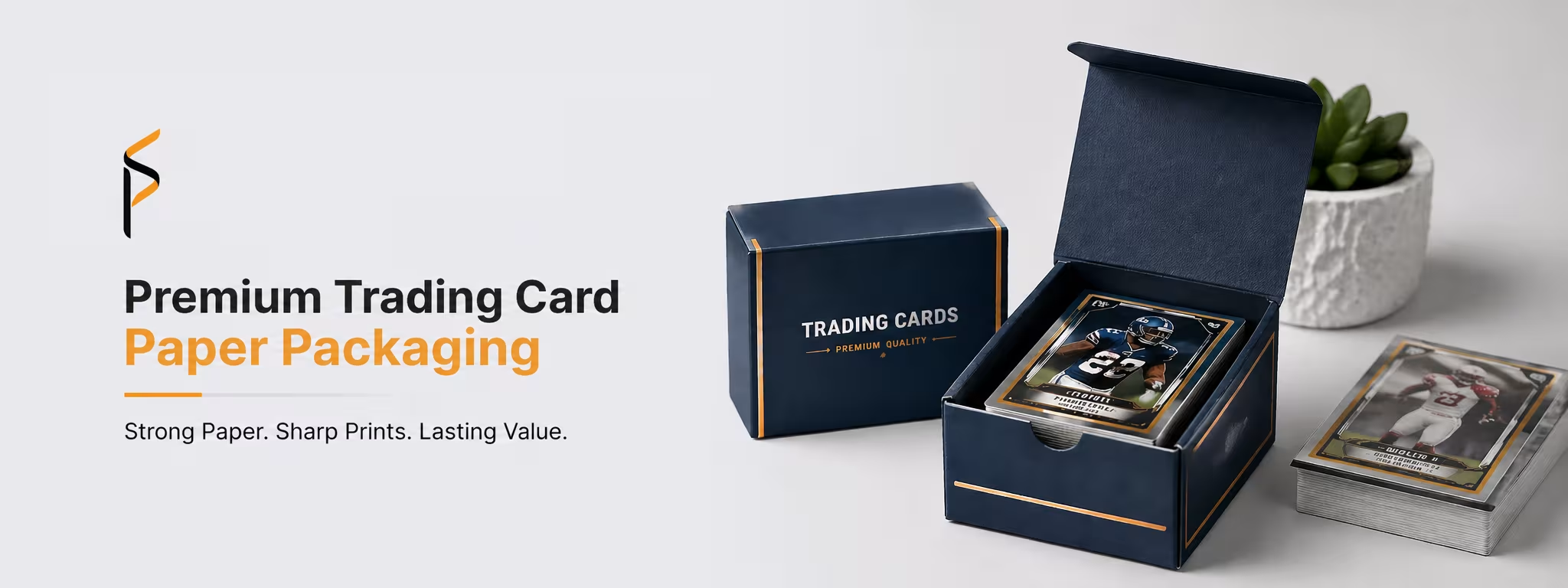
In the U.S. trading card packaging industry, durability is the foundation of product value. Whether cards are made...
 20
Oct
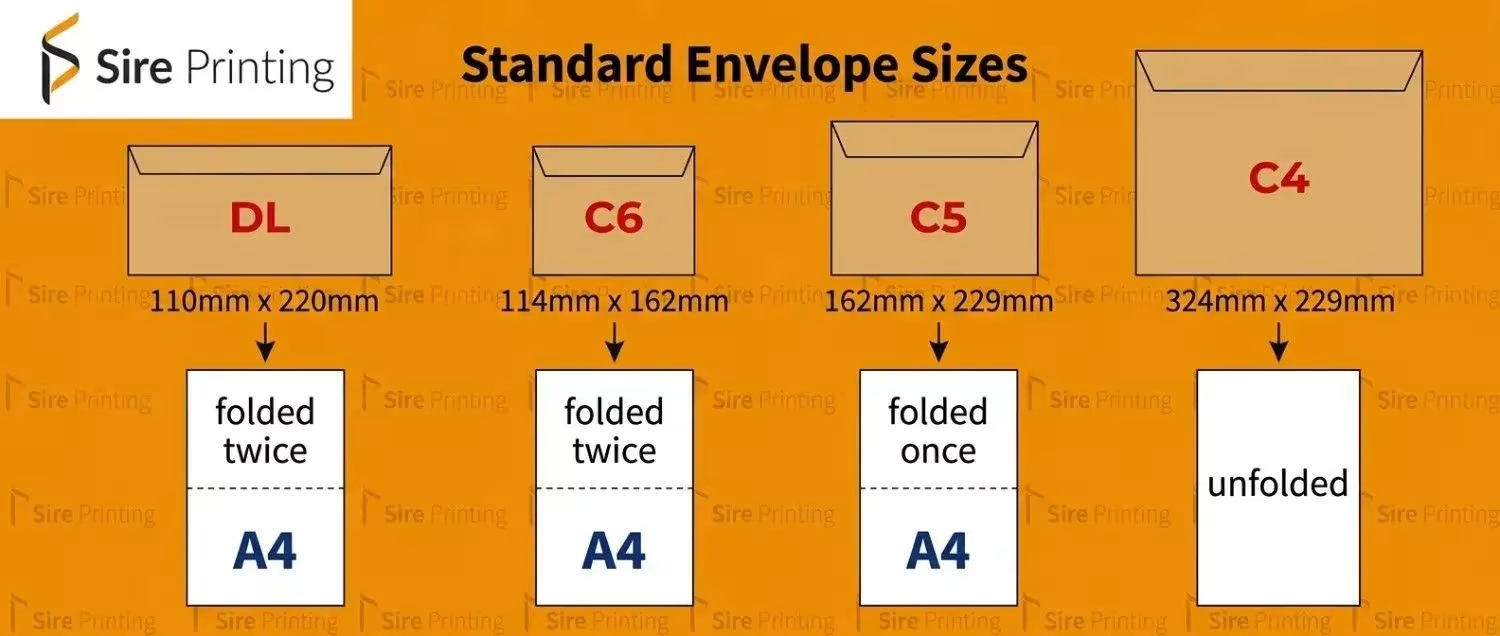
What Is the Standard Size Envelope? (And Why It Matters More Than You Think) If you’ve ever paused...
 06
May
In the United States, clinical trials operate under strict systems designed to protect patients and produce reliable results....