Why Correct Box Measurements Matter for Shipping and Packaging
Accurate box measurements are not just a technical detail—they directly impact cost, product safety, and customer satisfaction. If a box is too large, you end up paying higher dimensional weight charges. If it’s too small, the product can get damaged during transit. For U.S.-based sellers, carriers calculate rates based on size as much as weight, so even a small measuring error can increase expenses. Getting the measurement width height depth right ensures your packaging fits the product properly, reduces void fill, and keeps shipping predictable and efficient.
Box Dimensions Explained: Width, Height, and Depth Made Simple
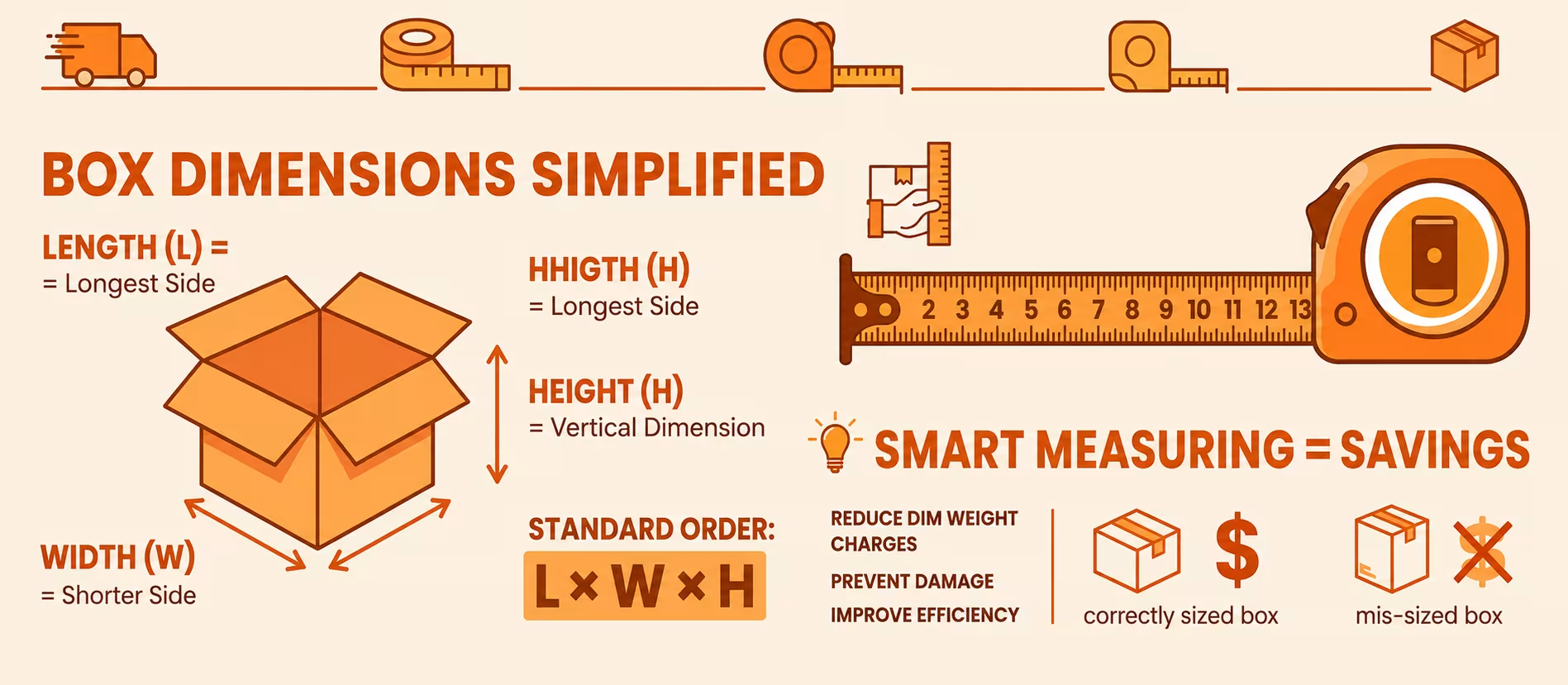
Many people confuse these terms, which leads to incorrect packaging decisions. In simple terms:
- Length (L) is the longest side of the box
- Width (W) is the shorter side (front to back)
- Height (H) is the vertical dimension (top to bottom)
Explanation of these width height depth measurements is essential when ordering or designing packaging. Whether you’re shipping small retail items or bulk inventory, knowing these dimensions removes guesswork and helps you choose the right box the first time.
Standard Order of Box Dimensions (L × W × H) Explained
In the U.S. packaging industry, box dimensions always follow a standard format: Length × Width × Height (L × W × H). This order is used by manufacturers, suppliers, and shipping carriers.
For example, if a box is listed as 12 × 8 × 6 inches:
- 12 = Length
- 8 = Width
- 6 = Height
Following this standard prevents costly misunderstandings. A reliable box dimensions guide will always use this sequence, so sticking to it keeps your measurements consistent when ordering or comparing packaging options.
Tools You Need to Measure a Box Accurately at Home or Warehouse
You don’t need expensive equipment to measure a box correctly, but using the right tools improves accuracy. A simple measuring tape or ruler is usually enough for most packaging tasks. For larger operations, digital calipers or measuring devices can speed up the process and reduce human error.
Flat surfaces also matter. Measuring on an uneven surface can give inaccurate results. Whether you’re working from home or in a warehouse, taking a few extra seconds to measure properly ensures your shipping box dimensions are correct and ready for carrier requirements.
Step-by-Step: How to Measure Width, Height, and Depth Correctly
Before you start measuring, place the box on a flat surface and make sure it is fully assembled. Always measure from edge to edge and keep your tape straight for accuracy. If the box is not fully opened or shaped, your measurements may be off.
- Measure the longest side of the box to determine the length
- Measure the shorter side from front to back for the width
- Measure from the base to the top for the height
- Always follow the order: Length × Width × Height
- Double-check all measurements to avoid errors
This simple process answers the common question of how to measure box dimensions without confusion.
Inside vs Outside Box Dimensions: Which One Should You Use?
This is one of the most common issues people face, especially for businesses like Sire Printing that focus on accurate and reliable packaging solutions. Inside dimensions refer to the usable space within the box, while outside dimensions include the thickness of the material.
For shipping purposes, carriers typically consider outside dimensions. However, when selecting packaging for a product, inside dimensions matter more because they determine whether the item will fit properly. Choosing the wrong type can lead to tight fits or unnecessary empty space, both of which can cause problems during transit.
Common Box Measurement Mistakes (and How to Avoid Them)
One frequent mistake is mixing up the order of dimensions. Another is measuring a flat or unassembled box, which gives incorrect results. People also sometimes round numbers too much, which can lead to boxes that don’t fit the product properly.
Avoid these issues by always measuring a fully assembled box and sticking to standard dimension order. Being precise saves time, prevents returns, and keeps your packaging process smooth.
How Accurate Measurements Reduce Shipping Costs in the USA
Shipping costs in the U.S. are heavily influenced by dimensional weight (DIM weight). This means carriers charge based on how much space a package occupies, not just its actual weight.
Accurate measurements help you avoid oversized boxes, which can increase costs significantly. By choosing the right size, you reduce wasted space, lower shipping fees, and improve efficiency. This is especially important for e-commerce businesses where margins can be tight.
Measuring Boxes for USPS, UPS, and FedEx Requirements
Major U.S. carriers like USPS, UPS, and FedEx have specific rules for package dimensions. They all use dimensional weight pricing, and they may apply surcharges for oversized packages.
To stay compliant:
- Always measure the outer dimensions of the box
- Round measurements as per carrier guidelines
- Check size limits before shipping
Following these rules ensures your packages are accepted without delays or extra charges.
Choosing the Correct Box Dimensions for Product Safety
Selecting the correct box size is just as important as measuring it. The box should be slightly larger than the product to allow space for protective materials, but not so large that it increases shipping costs.
Using Corrugated Boxes for Lightweight Products
When evaluating packaging options, lightweight products often perform well with Corrugated Boxes because they provide durability while keeping shipping costs manageable.
Premium Packaging Solutions with Rigid Boxes
High-end or luxury products usually require Rigid Boxes to create a stronger presentation and improve the customer experience.
Branding Benefits of Custom Packaging Boxes
Many businesses invest in Custom Packaging Boxes to create packaging that reflects their branding while improving product protection.
Why Mailer Boxes Are Popular for eCommerce Shipping
For online businesses, Mailer Boxes are widely used because they are durable, secure, and easy to assemble during the fulfillment process.
Benefits of One Piece Mailer Packaging
In many cases, One Piece mailer packaging designs help businesses improve efficiency while maintaining product safety during delivery.
How to Choose the Right Box Style for Your Products
Understanding How to choose the right box style helps businesses align packaging with product protection, shipping needs, and customer expectations.
Improving Packaging Design with Custom Box Styles
Many brands rely on Custom Box Styles to balance functionality, branding, and visual appeal for different types of products.
Using a Packaging Box Size Chart for Better Accuracy
For quick reference, a packaging box size chart can help match product dimensions with the most suitable box size, ensuring consistency and efficiency in the packaging process.