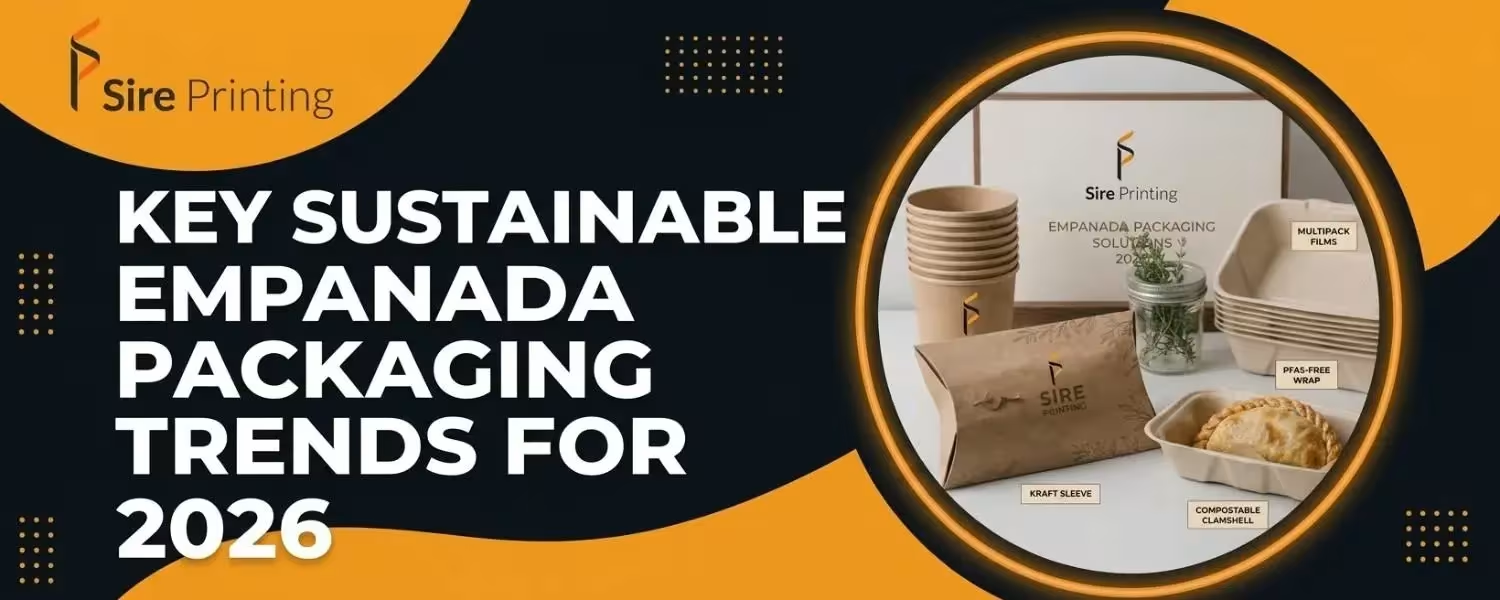
From Greasy Wrappers to Green Packaging: Sustainable Food Packaging Trends for Empanadas in 2026
SIRE PRINTING
Custom Packaging Solutions for Food Brands Across the USA
Quick Answer
The leading sustainable food packaging trends for empanadas in 2026 are FSC-certified kraft paper sleeves, PFAS-free grease-resistant wraps, commercially compostable clamshells, and molded fiber trays, all replacing petroleum-based plastics under growing state and EU regulatory pressure. Consumer demand for verified (not just claimed) sustainability is reshaping every format, from frozen retail multipacks to food-truck grab-and-go.
About 77% of US consumers now rank recyclability as their single most important packaging feature and empanada brands across the country are feeling that shift in real time. But here’s what most generic sustainability content misses: empanadas are one of the most packaging-challenging foods in the foodservice and retail world. They’re greasy, steamy, oddly shaped, and sold in radically different formats — fresh, frozen, hot-held, and delivered.
This article breaks down the sustainable food packaging trends for empanadas that actually matter in 2026, material by material, format by format — so you can make decisions grounded in function, compliance, and consumer trust, not just marketing buzzwords.
Why Empanada Packaging Is Its Own Sustainability Problem
Packaging a burger or a salad is relatively straightforward. Packaging an empanada is not. The product creates challenges that most eco-friendly packaging guides completely ignore — and if you choose your materials without accounting for them, your sustainable packaging will fail your product before it even reaches the customer.
The Grease Factor
Empanadas — whether beef, cheese, spinach, or seafood — carry high-fat fillings and are typically baked or fried. That means grease migration is a constant threat. If your packaging can’t manage oil transmission, you’re looking at soggy bottoms, leaking bags, and a presentation that tells the customer something went wrong before they take a single bite.
The Steam Problem
Hot empanadas release steam. In a sealed container, that steam has nowhere to go — it condenses against the packaging wall and drips back onto the crust, turning a perfectly crisp pastry into a soft, limp disappointment. Venting isn’t optional for hot-hold formats; it’s a core functional requirement.
The Shape Challenge
The crimped, domed edge of an empanada doesn’t lie flat. Standard sandwich wraps and flat-pack sleeves were never designed for this geometry. The result? Packaging that doesn’t close cleanly, displays poorly on a counter or shelf, and damages the product’s integrity during transit.
Three Formats, Three Different Packaging Needs
Finally — and this is where most packaging decisions go wrong — there is no single “empanada packaging solution.” A frozen retail multipack going into a grocery freezer case has entirely different requirements from a grab-and-go sleeve at a food truck, which is completely different from a delivery clamshell traveling fifteen minutes in a bag. Each format demands its own material logic.
|
|
Compostable vs. Recyclable vs. Biodegradable — Defined Clearly
These three terms are used interchangeably across packaging marketing, and that conflation costs brands credibility. In 2026, “Substantiated Sustainability” is the #1 named industry trend (Innova Market Insights) — meaning regulators and consumers alike are demanding verified, defined claims. Here’s what each term actually means:
- Compostable: Breaks down into nutrient-rich material under specific conditions and within a defined timeframe. The critical distinction: home compostable (breaks down in a backyard pile) and industrially/commercially compostable (requires the heat and controlled environment of a commercial composting facility) are not the same thing. Most kraft and fiber-based empanada packaging falls into the latter category — a fact that matters if your customer can’t access commercial composting in their area.
- Recyclable: Can be reprocessed into new material through municipal recycling systems. Recyclability depends heavily on local infrastructure. A package labeled recyclable in one city may not be accepted by the sorting facility in the next. Recyclable does not mean compostable — these are separate end-of-life pathways.
- Biodegradable: Breaks down naturally over time through microbial action. This term carries no regulated standard, no certification, and no defined timeframe in the US or EU — making it the weakest and most legally precarious claim a brand can make. Without a certification backing it, “biodegradable” is largely a marketing statement.
For empanada-specific packaging, commercially compostable kraft and fiber materials currently offer the most practical and verifiable sustainable path — provided the brand communicates clearly about what “compostable” requires from the customer.
Material-by-Material Breakdown for Empanada Packaging
Not all eco-friendly packaging solutions perform equally across empanada formats. Below is a practical breakdown of the five materials most relevant to this product category — followed by a comparison table you can use as a direct decision reference.
1. Kraft Paper Bags & Sleeves
FSC-certified, unbleached kraft paper is the workhorse of sustainable grab-and-go empanada packaging. It’s compostable (industrially), printable with food-safe inks, and reads as visually natural to sustainability-conscious consumers.
A well-constructed kraft sleeve handles moderate grease loads and works well for fresh empanadas sold at counter service, farmers markets, and bakery retail.
The limitation: kraft paper alone has modest moisture and oil resistance. For fried empanadas or longer dwell times, pair it with a dry-wax or machine-glazed barrier — both compostable alternatives to plastic laminate coatings.
2. Grease-Resistant Dry-Wax Wraps
The most underrated material in sustainable food packaging for fried applications. Dry-wax paper achieves oil resistance through a mechanical process — tightly woven fibers treated with a plant-derived wax — rather than a PFAS or plastic coating. This means it’s industrially compostable, PFAS-free, and food-contact compliant under FDA guidelines.
For food trucks, catering operations, or high-volume counter service, dry-wax wraps are the practical sweet spot: low cost, functionally grease-proof, and verifiably sustainable.
3. Compostable Clamshells
When hot-hold, delivery, or dine-in presentation is the priority, compostable clamshells — typically made from bagasse (sugarcane fiber) or molded fiber blends — provide the structural protection that a wrap or bag cannot. Bagasse clamshells are BPI Certified, ASTM D6868 compliant, and handle the steam venting challenge better than rigid plastic because the fiber construction breathes naturally.
These are your go-to for custom food boxes targeting restaurant takeout or delivery programs where presentation and thermal performance both matter. Well-designed clamshells can also accommodate custom printing to reinforce brand identity at the point of handoff.
4. Molded Fiber Trays
For frozen food boxes targeting grocery retail, molded fiber trays are the fastest-growing sustainable alternative to plastic CPET trays. They’re freezer-safe, structurally rigid enough for a multipack of four to six empanadas, and they accept compostable overwrap films or lidding.
The trade-off: uncoated molded fiber has moderate grease resistance, which is manageable for frozen products (where grease migration is slowed) but requires a barrier coating or compostable film lid for fresh or reheated formats.
5. PLA Film & Compostable Pouches
PLA (polylactic acid) film, derived from corn starch or other plant-based feedstocks, offers a clear window for retail merchandising while maintaining compostable credentials.
For frozen retail empanadas where the consumer needs to see the product, a proven sales driver — compostable PLA pouches or window patches on kraft bags provide the best of both: visual transparency and verified sustainability.
PLA film does require GRS or BPI certification to substantiate compostable claims. Without certification, the claim is unverified and increasingly risky under state greenwashing statutes.
Empanada Packaging Material Comparison
|
|
|
|
|
|
|
|
|
|
|
|
|
|
|
|
|
|
|
|
|
|
|
|
|
|
|
|
|
|
|
|
|
|
|
|
|
|
Solving the Grease and Sogginess Problem — The Technical Details
Most packaging guides stop at listing materials. This section explains the mechanism — because understanding why a material works for empanadas is what lets you make the right call when your format changes or your supplier can’t deliver your usual stock.
Grease resistance in paper packaging is achieved through one of two methods. Heat-glazed paper — sometimes called machine-glazed or MG paper — is pressed against a heated drum during manufacturing, which densifies the surface fibers and dramatically reduces oil penetration. Dry-wax treatment applies a thin, plant-derived wax layer that physically blocks oil while remaining compostable. Both are PFAS-free alternatives to fluorocarbon coatings, which have been the traditional grease-barrier solution for decades.
Sogginess is a separate problem with a separate solution. When a hot empanada is placed in a sealed container, steam from the filling and crust immediately begins to build up.
In a non-vented rigid package (a standard plastic clamshell, for example), that steam condenses on the lid and rains back down onto the food. Compostable bagasse clamshells address this through the inherent micro-porosity of the fiber structure — steam passes through the material at a rate that prevents condensation buildup without allowing significant heat loss.
The PFAS context here is critical. Traditional grease-resistant food packaging — the kind that’s been standard in fast food and bakery applications for thirty years — frequently used per- and polyfluoroalkyl substances (PFAS) as the barrier coating. PFAS are now classified as environmental and health hazards; several US states (including California, New York, and Minnesota) have enacted bans on PFAS in food-contact packaging, and the EU’s PPWR tightens these standards further.
For any brand selling across state lines in 2026, ‘No Added PFAS’ is no longer a marketing differentiator — it’s a compliance floor.
Matching Packaging to Your Empanada Format
The right material depends entirely on where your empanada is going and how it will get there. Here’s a direct format-to-packaging match for the three most common empanada distribution scenarios:
- Retail Frozen Multipack: Molded fiber tray with a compostable PLA film lid or overwrap. Needs to be freezer-safe, shelf-display friendly, and printable for retail-facing branding. A window in the lid or tray face is worth the cost — visible product outperforms blind packaging in grocery retail consistently. Trade-off: slightly higher unit cost than plastic CPET, offset by the growing retailer preference for compostable shelf-facing packaging.
- Food Truck / Grab-and-Go: Kraft paper sleeve or grease-resistant dry-wax bag. Lightweight, low-cost, fast to use during high-volume service. The kraft aesthetic reinforces sustainability perception at the point of sale, even before the customer reads a single claim. Custom printing with your logo and a compostable certification mark on the sleeve is a powerful trust signal that costs very little per unit.
- Restaurant, Catering & Delivery: Vented bagasse or molded fiber clamshell. The steam-venting property is non-negotiable for delivery, where empanadas sit in a bag for ten to fifteen minutes. A well-chosen clamshell maintains crust integrity during that window — a poorly chosen one destroys it. Look for BPI-certified clamshells with integrated venting and a secure closure mechanism to prevent shifting in transit.
Certifications That Turn a Claim Into a Credential
In 2026, a sustainability claim without a certification behind it is a marketing statement — and increasingly, a legal liability. The FTC’s Green Guides and state-level greenwashing statutes are tightening what brands can say without documentation. Here are the certifications that actually carry weight in the sustainable packaging materials space:
- BPI Certified Compostable: Issued by the Biodegradable Products Institute, this is the benchmark commercial composting certification in North America. A BPI mark means the product has been independently tested against ASTM D6400 or ASTM D6868 standards.
- ASTM D6868: The specific test standard for compostable packaging with paper or natural fiber substrates coated or laminated with biodegradable plastics. This is what most compostable clamshells and coated kraft solutions are certified against.
- GRS — Global Recycled Standard: Verifies the presence and chain of custody of recycled material content (PCR — post-consumer recycled content) in a product. Critical for packaging making recycled-content claims.
- FSC Certification: Forest Stewardship Council certification confirms that paper and wood fiber materials are sourced from responsibly managed forests. Essential for kraft paper claims.
- No Added PFAS: Increasingly required by law. Brands should ensure their supplier can provide test documentation confirming absence of intentionally added PFAS in all food-contact materials.
Regulatory Pressure Reshaping Packaging Decisions in 2026
The shift to sustainable food packaging is no longer driven only by consumer preference — it’s being mandated. A growing number of US states have passed or are implementing bans on intentionally added PFAS in food-contact paper packaging. California, New York, Minnesota, Colorado, and Maine are among the leaders, with more state-level legislation advancing through 2025 and 2026.
At the international level, the EU’s Packaging and Packaging Waste Regulation (PPWR) tightens standards on what sustainability claims brands can legally make — a policy that directly affects any US-based brand exporting to Europe or licensing products there.
The net effect: packaging decisions that were previously voluntary sustainability commitments are becoming hard compliance requirements. Brands that made the switch to PFAS-free food packaging and certified compostable materials two or three years ago are now ahead of the curve. Brands waiting for regulatory certainty are running out of runway.
Custom Branding on Sustainable Packaging — A Visual Trust Signal
There’s a dimension of sustainable packaging that rarely gets discussed in functional terms: the visual language it sends to the customer before they read a single word. Unbleached kraft paper, natural-fiber clamshells, and molded fiber trays all carry an inherent aesthetic of authenticity.
They look like a brand that cares about what it’s packaging — and that perception is measurable. Research consistently shows that natural-look packaging increases consumer perception of product quality and brand trustworthiness.
Custom printing on sustainable stock takes that signal further. When a brand’s logo, tagline, and BPI certification mark appear on an unbleached kraft sleeve, the packaging becomes an active marketing asset — not just a functional container.
For empanada brands at food trucks, farmers markets, or specialty retail, that sleeve travels through a crowded environment and becomes a conversation starter. For frozen retail, custom pastry boxes with clear sustainability credentials on the face give the product a shelf presence that generic white plastic can never match.
Sire Printing produces custom food-safe, grease-resistant, and compostable-compatible packaging for food brands across the USA — from small-batch grab-and-go sleeves to retail-scale frozen multipacks.
Getting the print right on sustainable substrates requires specific expertise in food-safe inks, material compatibility, and compostable certification preservation — which is exactly the work we do every day.
FAQ — Questions Empanada Brands Actually Ask
What are the biggest sustainable packaging trends in 2026?
The dominant 2026 shift is away from virgin plastic and PFAS-coated materials toward commercially compostable kraft, bagasse, and molded fiber — driven equally by consumer demand for verified sustainability and regulatory bans on PFAS in food-contact packaging. The overarching theme named by Innova Market Insights is “Substantiated Sustainability”: claims backed by third-party certification, not just marketing language.
What are real examples of sustainable food packaging for empanadas?
FSC-certified kraft paper sleeves for food-truck grab-and-go; BPI-certified bagasse clamshells for hot-hold delivery; molded fiber trays with compostable PLA lids for frozen retail multipacks; dry-wax grease-resistant wraps for fried empanada counter service. Each addresses the grease, steam, and format requirements unique to this product category.
What packaging keeps fried empanadas from getting soggy?
Vented compostable clamshells — particularly bagasse — are the most effective solution for hot-held fried empanadas. The micro-porous fiber structure allows steam to escape without condensing back onto the food. For grab-and-go, grease-resistant dry-wax paper bags or sleeves prevent oil migration while avoiding the sealed-container sogginess problem entirely.
Is kraft paper packaging compostable?
Uncoated and dry-wax-coated kraft paper is industrially compostable when FSC-certified and free of plastic laminate or PFAS coatings. It requires a commercial composting facility to break down correctly — it won’t compost effectively in a standard backyard pile. Brands should communicate this distinction clearly to avoid greenwashing exposure.
Are PFAS banned in food packaging in the US?
PFAS restrictions in food-contact packaging are now law in multiple US states, including California, New York, Minnesota, Colorado, and Maine, with more states advancing similar legislation. The bans target intentionally added PFAS in paper and fiber food-contact materials. Any brand selling packaged food across multiple states should treat PFAS-free food packaging as a baseline compliance requirement, not an optional sustainability upgrade.
What is the difference between compostable and biodegradable packaging?
Compostable packaging must meet defined breakdown standards (ASTM D6400 or D6868) within a specific timeframe under composting conditions — claims are verifiable through third-party certification (BPI). Biodegradable is an unregulated term with no standardized timeframe or conditions attached to it. In 2026, “biodegradable” without certification backing is considered a weak claim under FTC Green Guides and EU PPWR; “BPI Certified Compostable” carries actual legal and consumer weight.
The Bottom Line — Sustainable Packaging That Works for Empanadas
The sustainable food packaging trends for empanadas in 2026 are converging around one principle: function-first, certification-backed, format-matched materials that replace plastic without compromising product integrity. Kraft sleeves, dry-wax grease barriers, bagasse clamshells, and molded fiber trays each solve a specific packaging challenge — and choosing the right one requires understanding what empanadas actually demand, not just what general eco-packaging content recommends.
Regulatory pressure from PFAS bans and the EU PPWR is accelerating the timeline. Consumer demand for verified sustainability — not just claimed sustainability — is raising the bar on what brands need to communicate and prove. And the packaging itself, when branded correctly, becomes one of the strongest trust signals a food brand can send to a consumer at the point of sale or delivery.
The brands winning on this front right now aren’t the ones who made the loudest green claims. They’re the ones who got the materials right, got certified, and got their packaging working for their product. That’s the standard the sustainable food packaging trends for empanadas are converging toward — and it’s achievable with the right manufacturing partner.
Get Custom Sustainable Empanada Packaging — Built Right.
Sire Printing works with food brands across the USA to produce grease-resistant, compostable-compatible, and custom-printed packaging for every empanada format — from food-truck sleeves to frozen retail multipacks.
|
|