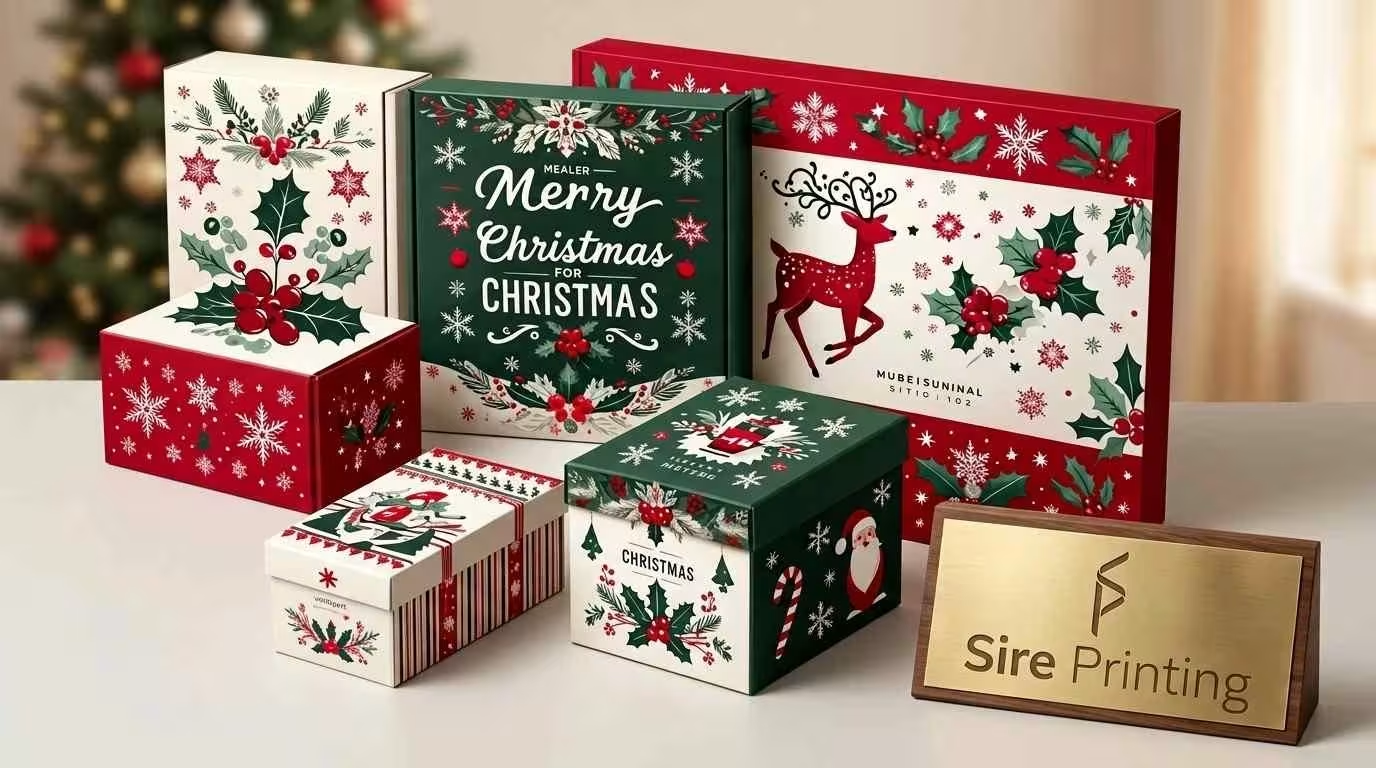
Sire Printing has helped hundreds of brands across the USA turn their Q4 shipments into year-round retention engines — through packaging that customers open, keep, and talk about.
Quick Answer
To design custom holiday packaging that increases repeat sales, build it around three moments: an unboxing experience that feels genuinely giftable, a design that gives the box a second life beyond December, and a built-in return path — a reorder QR code, a January exclusive offer, or a collectible insert that brings the customer back.
Order early, use unique promo codes per box design, and track your repeat purchase rate each season.
Holiday buyers are one of the most valuable — and most wasted — audiences in ecommerce. They arrive in Q4, they spend generously, and then they disappear.
If your seasonal packaging doesn't give them a reason to return in January, February, or March, you've handed a competitor a warm, converted customer. A beautiful custom Christmas boxes is a start. Custom holiday packaging design, built around a clear retention strategy, is where the real value lives.
In this guide, you will get the Arrive–Keep–Return framework that top ecommerce brands use to turn seasonal packaging into a repeat-sales engine.
You will also get a backward-planning production timeline, a budget-to-CLV example, and a measurement method you can run on a single season's shipment. Whether you're planning for this coming Q4 or building your strategy for next year, every insight here applies.
Why Holiday Packaging Is a Retention Tool, Not Just a Decoration
Most brands treat seasonal packaging as a visual upgrade — swap the standard brown mailer for something red and green, add a snowflake, ship it out. That mindset leaves measurable money on the table. The brands that grow their repeat purchase rate year over year treat the holiday box as the first touchpoint of a longer customer journey, not the last.
What the Data Actually Shows
In a March 2026 Adobe survey, 57% of consumers who had a memorable packaging experience purchased from that brand again.
That number climbs when the packaging feels personally curated rather than mass-produced.
A June 2026 VistaPrint study of 1,000 US adults reinforced the same pattern: 46% said packaging quality directly influenced whether they would buy again, and 56% said they would repurchase from a small business that delivered a genuine unboxing moment.
These are not soft brand-feeling numbers — they are retention metrics tied to real purchase decisions.
Where Seasonal Packaging Usually Fails
The failure mode is predictable. A brand invests in a festive box that looks great in the warehouse but arrives with no follow-up mechanism.
There is no insert, no QR code, no reason for the customer to think about the brand again once the gift wrap is in the recycling bin. The packaging did its job visually and then stopped working. The fix is structural — and it starts with a three-part framework.
The Arrive–Keep–Return Framework
This is the original angle most packaging guides skip. Designing for a beautiful arrival is table stakes. The brands that see measurable retention results design for all three moments: the arrival, the reason to keep the box, and the trigger that brings the customer back.
Arrive: An Unboxing That Feels Giftable
The unboxing experience begins before the product is even visible. Custom tissue paper with your brand's holiday print, a sticker seal in a signature color, and interior messaging printed directly on the box walls all signal that what's inside was prepared with intention.
Foil stamping on the exterior lid, soft-touch lamination, or spot UV on your logo create a tactile quality signal that gift recipients and end buyers both notice — and both photograph. That user-generated content (UGC) is free brand reach during the peak season.
For ecommerce brands shipping corrugated mailer boxes, even a single-color interior print and a custom tissue layer transforms the opening from a logistics event into a brand moment.
The edge crush test (ECT) rating on your corrugated material ensures the box arrives intact — because no retention strategy survives damaged goods.
Keep: Give the Box a Second Life
The most powerful retention mechanism in packaging design costs nothing extra to execute at the design stage: make the box worth keeping.
A rigid box with a clean interior in a neutral secondary color becomes a desk organizer, a keepsake chest, or a gift box the recipient reuses. A collectible series — where each holiday season produces a different illustrated design under a consistent brand architecture — gives customers a reason to look forward to the next order.
Brands that run a collectible holiday series report that returning customers actively mention the packaging in reviews and social posts, which compounds the marketing value of each production run.
Return: Build in a Reorder Path
The return mechanism is the most underused element in custom holiday packaging design.
A QR code printed inside the lid — linking to a January-exclusive offer or a curated "what's new" product page — keeps the brand present after the holiday noise settles.
An insert card with a unique promo code tied to that box run gives you a clean measurement signal: when the code is redeemed, you know the packaging drove the return.
For custom Christmas gift boxes going to end consumers through a gift buyer, this insert can speak directly to the recipient: "If someone gave you this — welcome. Here's 15% off your first order."
Custom Holiday Packaging Ideas That Drive Repeat Purchases
Keep Your Brand Recognizable With a Holiday Spin
The seasonal temptation is to go full Christmas — deep red, reindeer, snowflakes — and abandon your normal brand identity entirely. Resist it. The customers who return in January need to recognize you in February.
The more effective approach is a brand-consistent holiday edition: your signature color palette shifted toward warmer seasonal tones, your logo featured prominently, and holiday elements used as accents rather than replacements.
Branded holiday packaging that feels like an extension of your identity creates continuity between the seasonal gift experience and the year-round customer relationship.
Colour, Finishes, and Print That Make the Box Worth Photographing
Print and finish decisions have a direct impact on perceived value. Foil stamping on the lid of a rigid box catches light in a way that photographs extremely well — which matters for UGC.
Soft-touch lamination on a matte exterior creates a premium hand feel that influences how customers describe the product to others. Spot UV on select graphic elements adds depth without adding bulk to the design.
On the technical side: Pantone-matched colors give you consistency across production runs, which is essential if you're building a multi-year collectible series.
CMYK is sufficient for photographic or gradient-heavy holiday artwork but can drift between print runs if not managed carefully. At Sire Printing, we walk brands through which approach fits their design direction and budget before the dieline is finalized.
Inserts and Personal Touches That Customers Remember
A thank-you card costs less than a dollar per unit at volume and consistently shows up in customer reviews as the detail that made the experience feel personal.
For high-value orders, a hand-signed note from the founder or a team member photograph scales better than you might expect — customers who receive them share them publicly far more often than they do standard packing slips.
Custom stickers included with the order give recipients a brand artifact they place on laptops and water bottles, extending your visibility well past Q4.
Limited-Edition and Collectible Series Packaging
Scarcity is one of the oldest retail psychology tools for a reason — it works.
A limited edition holiday packaging run that is explicitly marked as seasonal and numbered (or year-stamped) creates a reason for existing customers to order before the design is gone and a reason for them to collect the next year's edition.
The year-two return hook is real: brands that commit to a collectible series framework typically see a measurable lift in repeat purchase rate among the cohort that bought the first edition. The design investment pays for itself before the second season.
Gifting-Ready Packaging That Does the Selling for You
A growing share of holiday buyers are purchasing gifts for people they know well but whose specific preferences they aren't sure of. A box that feels premium enough to give without rewrapping removes a barrier to purchase.
See our range of custom Christmas gift boxes for styles designed around the gifting moment — including options with ribbon-pull closures, magnetic lids, and interior messaging panels. For the broader design direction the industry is moving in this season, the 2026 Christmas packaging trends roundup covers what's resonating with US consumers right now.
Choosing the Right Box Style for Holiday Orders
The structure of the box matters as much as the print on it. Here is a comparison of the four most common formats for holiday ecommerce packaging:
|
|
|
|
|
|
|
|
|
|
|
|
|
|
|
|
|
|
|
|
|
|
|
|
|
|
|
|
|
|
Before any box goes to production, request a digital proof of the dieline — the flat template showing exactly where every graphic element falls on the folded structure.
A printed prototype catches registration issues, fold-line conflicts, and color surprises before they appear on 500 units.
A Backward-Planning Timeline for Holiday Packaging
The most expensive mistake in holiday packaging isn't a bad design — it's a late order.
At Sire Printing, we recommend using the table below to work backward from your last ship date.
|
|
|
|
|
|
|
|
|
|
|
|
|
|
|
|
|
|
|
|
|
|
|
|
|
|
|
|
|
|
|
|
|
|
|
|
Budget and ROI: What Custom Holiday Packaging Really Costs
Cost Per Box vs Customer Lifetime Value
Illustration Only — Not a Quote: The figures below are hypothetical examples to illustrate the CLV calculation logic. Contact Sire Printing for an accurate quote based on your specifications.
Imagine a mid-sized skincare brand running 1,000 units of a custom rigid box with foil stamping and a printed insert.
The packaging upgrade costs an additional $1.80 per unit over a plain mailer. Total added spend: $1,800. If the insert promo code drives 120 repeat purchases at an average order value of $65, the revenue attributable to the packaging insert alone is $7,800 — a 4.3× return on the packaging upgrade. That math doesn't include the UGC, the word-of-mouth referrals, or the customer lifetime value multiplier on those 120 retained buyers.
MOQ and How to Stay Within Budget
Sire Printing works with brands at various production scales. Our MOQs vary by box style and finish — rigid boxes typically start at 50–100 units, mailer boxes at 100+, and corrugated shippers are available at lower MOQs for brands just entering custom packaging.
If you're testing a new holiday design before committing to a full run, a smaller prototype batch lets you validate the design and the insert strategy before scaling.
Protect the Experience: Prevent Damage in Transit
A Shorr Packaging survey found that 73% of consumers are less likely to buy from a brand after a damaged delivery. No insert card, QR code, or foil-stamped lid recovers from a crushed corner. The structural decisions matter as much as the visual ones. Right-sizing your box to the product, so there is minimal void fill needed — reduces movement in transit and improves the unboxing moment.
Custom interior inserts (molded pulp, foam, or corrugated dividers) hold fragile items securely while adding a visual layer of premium presentation when the lid opens. For corrugated shippers, the ECT (edge crush test) rating tells you how much stacking pressure the box can handle in a warehouse or delivery vehicle — ask your printer for the specification.
Sustainable Holiday Packaging Without Greenwashing
Eco-friendly holiday packaging is a genuine differentiator with US consumers — but only if the claims are honest. The FTC Green Guides are explicit: vague terms like "eco-friendly" or "sustainable" without substantiation can constitute deceptive marketing. Here is how to stay credible.
● FSC-Certified Paper: Use FSC-certified board and say so specifically. It signals responsible forest sourcing and is a claim you can verify and document.
● Recyclable vs Recycled: "Recyclable" means the material can be recycled in standard programs. "Recycled content" means the board is made from post-consumer material. These are different claims — don't conflate them.
● How2Recycle Labeling: Adding a How2Recycle label gives consumers clear disposal instructions and signals that you've done the testing to back your recyclability claim.
● Honest Trade-offs: Kraft paper boxes are genuinely recyclable and have a natural aesthetic — but they have lower water resistance than coated paperboard.
Rigid boxes made with magnetic closures often can't be recycled as a single unit. Being transparent about these trade-offs builds more trust than a vague "green" headline.
How to Measure Whether Your Packaging Is Bringing Customers Back
Attribution in packaging is simpler than most brands assume. You don't need a sophisticated analytics stack — you need two things: a unique identifier per box design and a metric to watch before and after the season.
Tracking Methods That Actually Work
Print a unique QR code or promo code on each insert that is specific to the holiday box design.
Use UTM parameters in the QR destination URL so your analytics platform captures source, medium, and campaign. If you run two insert designs across the same shipment batch, use two different codes — that's a real-world A/B test with meaningful signal. The redemption rate of each code tells you which design drove more return behavior.
Metrics to Watch After the Season
● Repeat Purchase Rate: The percentage of holiday buyers who made a second purchase within 90 days. This is your primary packaging-driven retention metric.
● Customer Lifetime Value (CLV): Track whether Q4 cohorts show higher CLV over 12 months when exposed to the insert-plus-QR format vs a plain shipment.
● Average Order Value (AOV): Returning customers often order more. A lift in AOV among the returning cohort suggests the packaging experience elevated their perception of your brand.
● UGC and Social Mentions: Monitor branded hashtags and product tags in the 30 days after your holiday ship window. Packaging-driven UGC is the organic reach signal that's hardest to fake and easiest to recognize.
● Return Rate: Premium packaging correlates with lower return rates — customers who feel good about the purchase are less likely to second-guess it.
Common Mistakes to Avoid
● Over-specific Christmas designs: A box covered in reindeer and "Merry Christmas" typography cannot be repurposed for Valentine's Day, Mother's Day, or standard Q1 shipments. Design for holiday spirit, not a single holiday.
● No return path: If the insert only says "thank you for your order," you've missed the most impactful square inch of real estate in your packaging.
● Ordering too late: Rushing production compresses the proof and prototype stage — where most print problems are caught. A late order and a compromised proof are a costly combination.
● Over-decorating at the cost of protection: A stunning exterior on a box that doesn't hold its shape in transit is a brand liability. Finish and structure decisions must be made together.
● Unsupported eco claims: If you can't document the claim with a certification or lab test, don't make it. Vague sustainability language is a growing area of FTC enforcement and consumer skepticism.
What We See at Sire Printing (First-Hand Experience)
Every Q4 season, our production team processes a significant volume of holiday packaging orders across the US market — rigid boxes, custom mailer boxes, corrugated shippers, and specialty runs.
The pattern we see most consistently: brands that plan their custom holiday packaging design by mid-August arrive in October with approved proofs and prototype sign-offs, giving them a comfortable buffer before Black Friday and Cyber Monday. Brands that reach out in late October are often choosing between design simplification or expedited production costs.
The finishes that perform best for our clients in terms of premium perception and UGC generation are soft-touch matte lamination with foil stamping on the lid and a full-bleed interior print.
Custom tissue paper with a repeat pattern in brand colors is consistently cited in customer reviews as a detail that made the unboxing feel premium. Magnetic rigid boxes with ribbon-pull closures score highest for gifting-ready orders.
We also produce custom tissue, hang tags, stickers, and thank-you card inserts as part of a complete holiday packaging run — so brands can source the full unboxing experience from a single production partner rather than coordinating across multiple vendors.
If you would like to see samples relevant to your product category, contact our team and we will send a sample kit.
The Bottom Line: Design for All Three Moments
Custom holiday packaging design that drives repeat sales isn't about picking the most festive box on the shelf. It's about engineering three consecutive customer experiences: an arrival that feels giftable and shareable, a box worth keeping long after the wrapping paper is gone, and a return path so clear that reordering feels like the obvious next step. The brands that build all three into their holiday packaging don't just have a great Q4 — they have a better Q1, Q2, and Q3.
Ready to Design Holiday Packaging That Works Year-Round?
Get a free sample kit and a no-obligation quote from the Sire Printing team. Most holiday orders ship within 7–12 business days of proof approval.
📞 (332) 222-4710 | ✉ support@sireprinting.com | 🌐 sireprinting.com