Soggy Crepe Cones Are Costing You Sales — Here's the Real Fix
By Sire Printing | Custom Food Packaging Experts | USA
You nail the batter. You perfect the fold. You plate it beautifully and within eight minutes, a customer hands it back with a limp, wet cone that's lost its shape and ruined their experience.
Soggy crepe cones are one of the most frustrating and underestimated problems in the food service world. And almost always, the culprit isn't your recipe.
It's your packaging.
|
|
The Real Answer First: Why Do Crepe Cones Get Soggy?
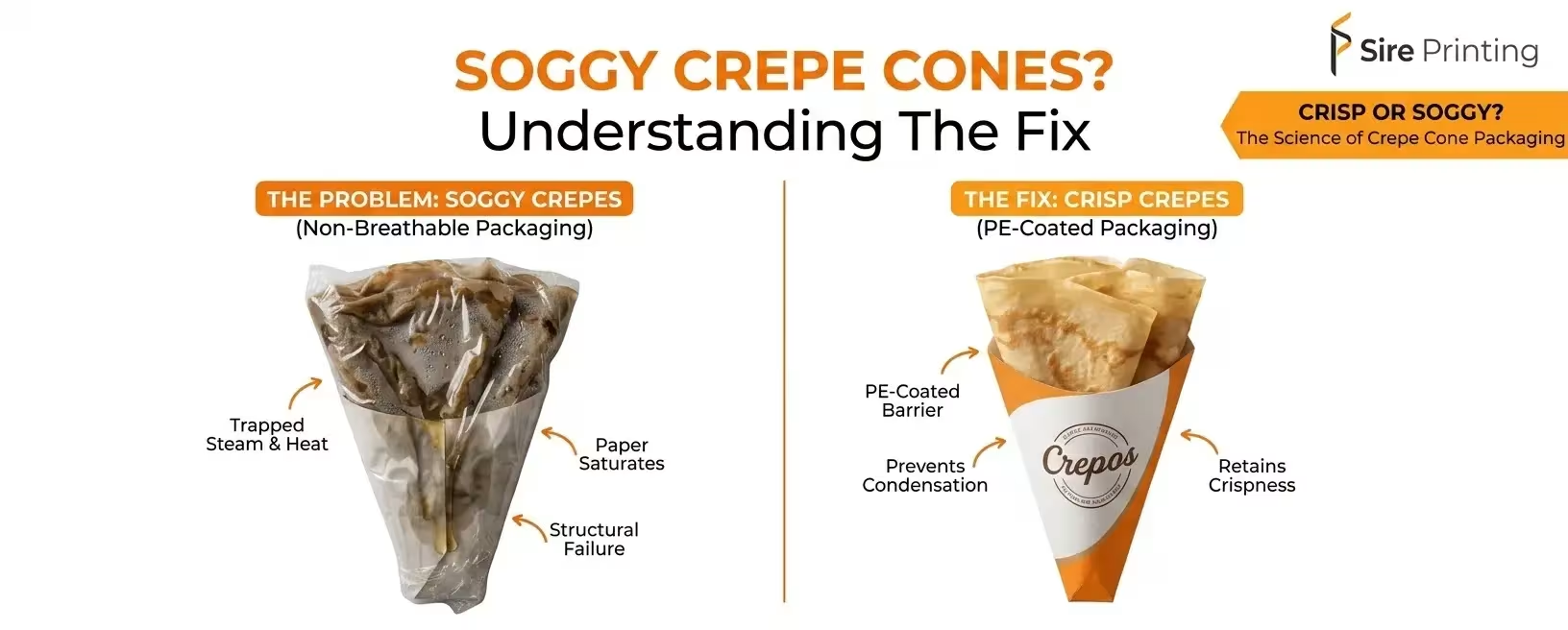
Crepe cones go soggy because steam from warm fillings condenses against the inner wall of the cone when there's no breathable barrier. That trapped heat turns to liquid, saturates the paper or dough, and the structure collapses.
Three forces are always at work: heat, humidity, and contact time. When packaging ignores all three, sogginess is inevitable — no matter how good your recipe is.
The Science of Moisture Transfer Nobody Talks About
Crepes are thin. That's the whole point. But thinness means there's very little structural mass to resist moisture infiltration.
When you fill a warm crepe with cream, fruit, Nutella, or any moisture-rich topping, the filling immediately begins releasing water vapor. This vapor has nowhere to go if it's enclosed in a tight holder or wrapped in non-breathable material. It condenses, then absorbs directly into the cone wall.
This process — called transient moisture migration — can reduce the structural integrity of a crepe cone by up to 60% within the first 10 minutes of service. That's not speculation. Food packaging researchers at Cornell's food science department have studied moisture vapor transmission rates (MVTR) in paper-based food containers and found that most standard food-grade papers have zero resistance to steam condensation at temperatures above 140°F.
That's exactly the temperature range of most warm crepe fillings.
Why Does Crepe Packaging Fail? The 4 Biggest Reasons Crepe Packaging Fails
The crepe cone getting wet packaging problems is rarely a recipe issue that starts long before the filling goes in. Understanding the crepe cone moisture problem requires looking at the full service chain, not just the moment of filling. Here's where things break down most consistently:
1. Wrong paper weight and coating
Standard uncoated paper absorbs moisture within minutes. Most off-the-shelf crepe cone holders are made from 200–250 GSM paper with no moisture barrier. That's a recipe for structural collapse.
2. Tight wrapping with zero ventilation
Wrapping a warm filled cone tightly traps steam. That steam condenses against the outer dough layer and softens it rapidly. Even a small gap for air circulation dramatically reduces moisture buildup.
3. Holding time at room temperature
After 7–10 minutes at counter temperature, even a well-packaged cone will begin to soften if the filling is warm and wet. Most crepe businesses underestimate this window.
4. Incompatible filling-to-cone ratios
Overfilling concentrates moisture in the tip of the cone where the paper layers are thinnest. That corner is the first to fail.
How to Prevent Soggy Crepe Cones: The Practical Fixes
This is where most guides stop at "use wax paper" — which isn't nearly good enough. Here's what actually works:
Choose Moisture-Resistant Cone Holders
The single most impactful change you can make is switching to purpose-designed crepe cone packaging with PE-coated inner walls. Polyethylene coating creates a moisture vapor barrier that blocks condensation from reaching the dough layer. It doesn't trap heat — it redirects moisture away from the food contact surface.
Use a Dry Barrier Layer at the Base
The cone tip is the danger zone. A single small layer of food-grade parchment or a grease-resistant base insert at the filling line prevents direct wet contact at the most structurally vulnerable point.
Control Filling Temperature
Fillings served above 150°F accelerate moisture release dramatically. Cooling cream-based fillings to 110–120°F before loading reduces steam production by roughly 40% without affecting taste or texture. Small operational changes like this, paired with better packaging, compound your results.
Optimize Your Counter Display Time
Build a 7-minute rule into your service flow. Cones held longer than seven minutes after filling — even in good holders — begin to show softening. Either fill to order or pre-pack with ventilated packaging that extends that window.
Packaging Comparison: What Actually Works
|
|
|
|
|
|
|
|
|
|
|
|
|
|
|
|
|
|
|
|
|
|
|
|
|
|
|
|
|
|
If you're currently using uncoated holders, the switch to coated packaging alone can extend your quality window by 2–3x.
The Business Cost of Getting This Wrong
A soggy cone isn't just a bad customer experience — it's a measurable revenue problem.
Studies in food retail show that a single negative sensory experience (texture, temperature, structural failure) reduces repeat purchase likelihood by 37%. For a crepe business doing 80–120 transactions a day, even a 10% repeat purchase drop means significant monthly revenue loss.
Your packaging is the last thing that touches your product before the customer does. It deserves the same attention as your batter recipe.
Beyond Crepe Cones: Protecting Your Full Menu
If you're thinking seriously about packaging quality for cones, it's worth auditing your full lineup. The same moisture science that destroys crepe cones also affects how you package pastries, breads, and frozen desserts.
Our custom food boxes wholesale solutions are built to handle moisture-intensive products across the full menu. Businesses that upgrade their full packaging ecosystem — not just one SKU — see consistently better product quality ratings and fewer waste incidents.
For baked goods served alongside crepe menus, our custom bakery boxes provide the same moisture-barrier engineering in formats designed for retail and counter display. And if you serve ice cream crepes or rolled ice cream? Our ice cream boxes are engineered specifically for frozen and semi-frozen dessert moisture control.
|
|
Frequently Asked Questions
Why does my crepe cone get wet even when the filling isn't very hot?
Room-temperature fillings still release moisture vapor, especially those with high water content like fresh fruit, whipped cream, or custard. The issue isn't just heat — it's the water activity level of the filling in contact with porous paper.
Does wax paper actually prevent soggy crepe cones?
Wax paper slows moisture transfer but doesn't stop it. It has a low melting threshold and breaks down quickly under warm filling contact. PE-coated packaging outperforms wax in both moisture resistance and structural durability.
How long can a filled crepe cone last in good packaging?
With properly coated, purpose-built holders and fillings below 120°F, quality hold time ranges from 10–15 minutes. Dry fillings extend this further. This is sufficient for most counter and market-style service models.
What paper weight should a crepe cone holder be?
A minimum of 300 GSM with a moisture-barrier inner coating. Anything lighter without a coating will absorb steam and collapse under warm, wet fillings.
Can packaging fix soggy cones even if my filling is very wet?
Packaging is a major factor, but combination fixes work best — better holders, cooler filling temps, and optimized hold times together create the most reliable results.
Sire Printing specializes in custom food packaging engineered for real food service environments. From crepe cone holders to wholesale food boxes, every solution is built around the science of keeping food fresh, intact, and presentation-ready.