|
|
|
|
Every year, millions of households across the USA face the same post-holiday standoff: the tree that came out of the box effortlessly in November simply refuses to go back in by January. You push, you compress, you sit on the lid — and something snaps. A branch tip bends the wrong way. A box seam splits. And suddenly your $200 artificial tree is looking rough heading into next season.
This guide cuts through the vague generic advice and explains exactly why trees resist repacking and precisely how to fix it — step by step, with real techniques used by packaging professionals and seasonal storage experts. Whether your tree is a slim pencil style or a wide pre-lit 9-footer, these methods apply.
And if your original box is already gone or damaged beyond use, we'll cover the smartest replacement options — including why a properly sized custom Christmas box can protect your tree for a decade of storage, not just one season.
|
|
Why Your Christmas Tree Doesn't Fit Back in the Box (The Real Reason)
Most guides skip this entirely, which is why people keep struggling year after year. Here's what's actually happening:
Artificial tree branches are made from wire cores wrapped in PVC or PE needles. At the factory, branches are folded tightly against the trunk using specialized compression equipment, then the tree is packed immediately before the wire has time to relax. That gives you a clean, compact bundle.
Once you open the box and let the tree settle for a holiday season — even if you never fluffed the branches aggressively — the wire naturally stress-relieves into a wider resting position. This is a basic property of metal wire: it finds a comfortable angle over time. By the time you're taking the tree down, each section can be 15–30% wider than its factory-packed state.
Understanding this tells you the solution: you don't need to force the tree — you need to guide each branch back through a slow, deliberate fold before trying to compress any section. That's exactly what the step-by-step process below achieves.
Special Consideration: How to Disassemble a Pre-Lit Christmas Tree
Pre-lit trees carry one extra complication: the wiring. Light strands run through the branches and down through the center pole, and they tangle during disassembly if you rush the process. According to a 2023 holiday retail survey, damaged light strands are the #1 reason pre-lit tree owners report needing tree replacement within three years.
Before you touch a single branch, unplug the tree completely and allow it to cool for at least 20 minutes if it's been on. Then, starting from the topmost light connection point, loosely bundle each strand against its branch using a soft twist tie or velcro wrap before folding that branch inward. Never let excess wire dangle free during section removal — it catches on adjacent branches and pulls solder points apart.
Managing the Cord During Repacking
Thread loose cords through the center pole channel in the same direction they exit at the base. When you compress each section, fold branches first, then guide the cord into the fold — never trap it under a branch. A trapped wire, compressed under a heavy section over months of storage, develops micro-cracks in the insulation that create fire hazards the following season.
Step-by-Step: The Right Way to Repack an Artificial Christmas Tree
Follow these steps in order. Skipping or rearranging them — especially trying to compress sections before fully folding branches — is the primary cause of bent wire frames and broken branch tips.
Step 1 — Remove All Decorations First
1. Take off every ornament, garland, ribbon, and tree topper before touching the branches. One forgotten heavy ornament can snap a branch tip during compression. Check inside dense branch layers, not just the surface.
Step 2 — Remove the Tree Topper and Top Section
2. Always disassemble top-to-bottom, not randomly. The top section is lightest and has the smallest circumference — it establishes your folding rhythm. Lift it straight up from the hub connector. If it feels stuck, a slight counterclockwise rotation usually releases it.
Step 3 — Fold Every Branch Downward and Inward
3. This is the most important step. Starting from the outermost branch tips, fold each branch down and in toward the center pole in a fluid sweeping motion — not snapping it shut, but guiding it. Work around the section methodically, not randomly. Think of it like closing an umbrella: systematic and smooth, not crumpled.
Step 4 — Secure Each Section Before Stacking
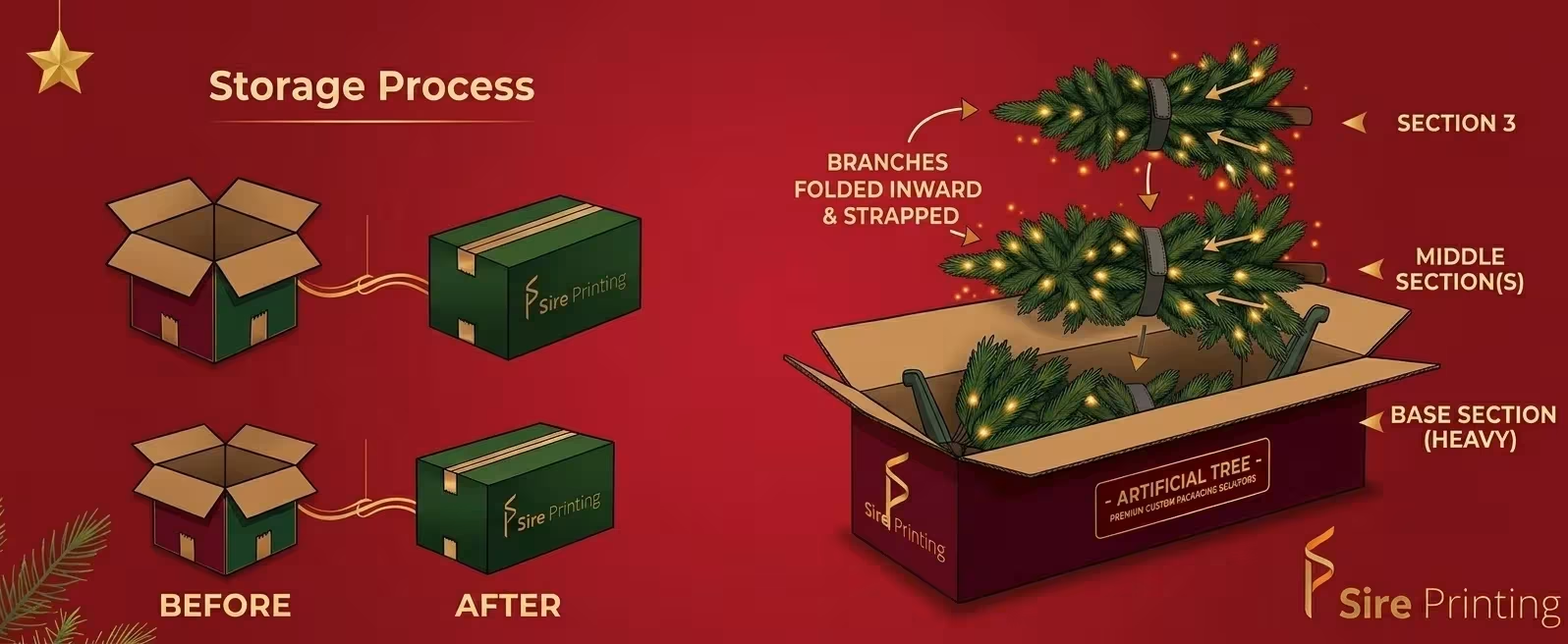
4. Once a section's branches are folded, use a soft bungee cord or a wide velcro strap (not zip ties, which cut into branch wires) to loosely hold the position while you work on the next section. This prevents branches from springing back open while you're handling adjacent pieces.
Step 5 — Lower Sections Into the Box Base-First
5. The heaviest section — the base with the stand — goes in first. It sets the footprint. Then stack the middle sections, and finally the top. Never stand sections upright in the box — horizontal stacking with branches folded inward distributes weight evenly and prevents corner crushing.
Step 6 — Fill Gaps With Cushioning
6. Empty space inside the box allows sections to shift during storage and handling, which is how hinged branches get bent between seasons. Crumpled kraft paper, foam wrap, or even clean towels fill voids effectively. The goal is a snug, stable pack — not a compressed one.
Step 7 — Seal and Label the Box
7. Close the box flaps and reinforce all seams with wide packing tape applied in both directions across the main openings. Label the box on two visible sides: tree height, type, section count. You'll thank yourself next November.
What to Do When the Original Christmas Tree Box Is Damaged or Gone
This is the scenario most guides completely ignore — and it's one of the most common. Original tree boxes are made with thin corrugated walls designed to survive shipping from the factory once. After a few seasons of attic stacking, moisture exposure, or a rough move, those seams split and corners crush. The box becomes structurally useless.
At that point, you have three realistic options — and they're not equal:
|
|
|
|
|
|
|
|
|
|
|
|
|
|
|
|
|
|
|
|
|
|
|
|
|
|
|
|
|
|
|
|
|
|
|
A custom storage box isn't just a "nice to have" — it's the only option that's designed around your actual tree dimensions, with double-wall corrugated construction and proper closure flaps that don't split under weight. For households that invest in premium artificial trees, protecting that investment with durable packaging makes clear financial sense.
Sire Printing's Christmas gift boxes and custom storage solutions are built to handle repeated seasonal use — not a single factory shipment. If you're replacing a damaged box, it's worth doing it properly.
|
|
Storage Location Matters More Than You Think
Even a perfectly repacked tree can degrade in the wrong storage environment. Attics and garages are the two worst options for most regions of the USA — and yet they're the most commonly used.
Moisture and Mildew Damage
PVC needles are moisture-resistant, but the internal wire frames and cardboard box sections are not. In a humid attic or basement, moisture absorption causes cardboard seams to weaken and wire cores to oxidize — producing rust stains that bleed into the PVC needles by the following season. If your storage area runs above 60% relative humidity seasonally, add a silica gel packet or two inside the closed box.
Temperature Swings and PVC Brittleness
PVC becomes brittle at sustained temperatures below 32°F. Attics in northern states regularly drop well below that in January and February. A tree stored at those temperatures and then moved to a warm room can experience micro-cracking in branch tips within a few seasons. Climate-controlled storage — even a closet — extends tree lifespan meaningfully.
Pest Intrusion
Unsealed cardboard boxes in attics and garages are known nesting sites for mice and insects during winter months. A tree box with open seams is an invitation. This is another practical reason why a properly sealed custom storage box outperforms a taped-up original box — closed flaps and solid corrugated walls leave no entry points.
Quick-Reference Repacking Checklist
|
|
Frequently Asked Questions
Why won't my Christmas tree fit back in the box after just one season?
The wire branches inside your tree have stress-relieved into a slightly wider resting angle since they were factory-packed. This is normal metal behavior, not a defect. The fix is to fold each branch deliberately downward and inward before attempting compression — not to force the tree in by pressing harder on the lid.
Can I use a bigger box instead of the original?
A larger box creates a different problem: sections shift during storage, and hinged branch connectors bend under uneven weight. If your original box is damaged, the better solution is a custom-fit box sized to your actual tree dimensions — not a random oversized box with gaps.
How do I store a Christmas tree without a box at all?
A heavy-duty tree storage bag works as a stopgap, but it offers zero crush protection from stacked items above it. Without rigid walls, compressed sections can permanently deform the outer branch tips. For any tree worth storing long-term, a rigid box — custom or otherwise — is the right call.
How do I keep my pre-lit tree lights from tangling during storage?
Bundle each strand against its branch before folding. Use velcro wraps or soft twist ties — never rubber bands or zip ties, which either dry out and snap or cut through insulation. Work from the top of the tree downward, securing each strand as you go rather than folding first and bundling after.
How long should an artificial Christmas tree last in proper storage?
A quality artificial tree, repacked correctly and stored in climate-controlled conditions, realistically lasts 10–20 seasons. The #1 cause of early replacement isn't the tree itself — it's storage damage from poor repacking, moisture, and pest intrusion.
Give Your Tree — and Your Brand — Packaging That Lasts
The difference between a tree that survives 15 seasons and one that looks battered after three comes down to how it's stored. That starts with the box.
At Sire Printing, we design custom packaging solutions built for real-world use — not one-time factory shipments. Our custom Christmas boxes are constructed with double-wall corrugated material, precision-sized to your product, and finished to reflect the quality of what's inside. Whether you're a household protecting a premium tree or a brand shipping holiday products across the country, the right box isn't a detail — it's the foundation.
|
|