How Many Grams Are in an Eighth of an Ounce? The Full Answer, Not Just the Number
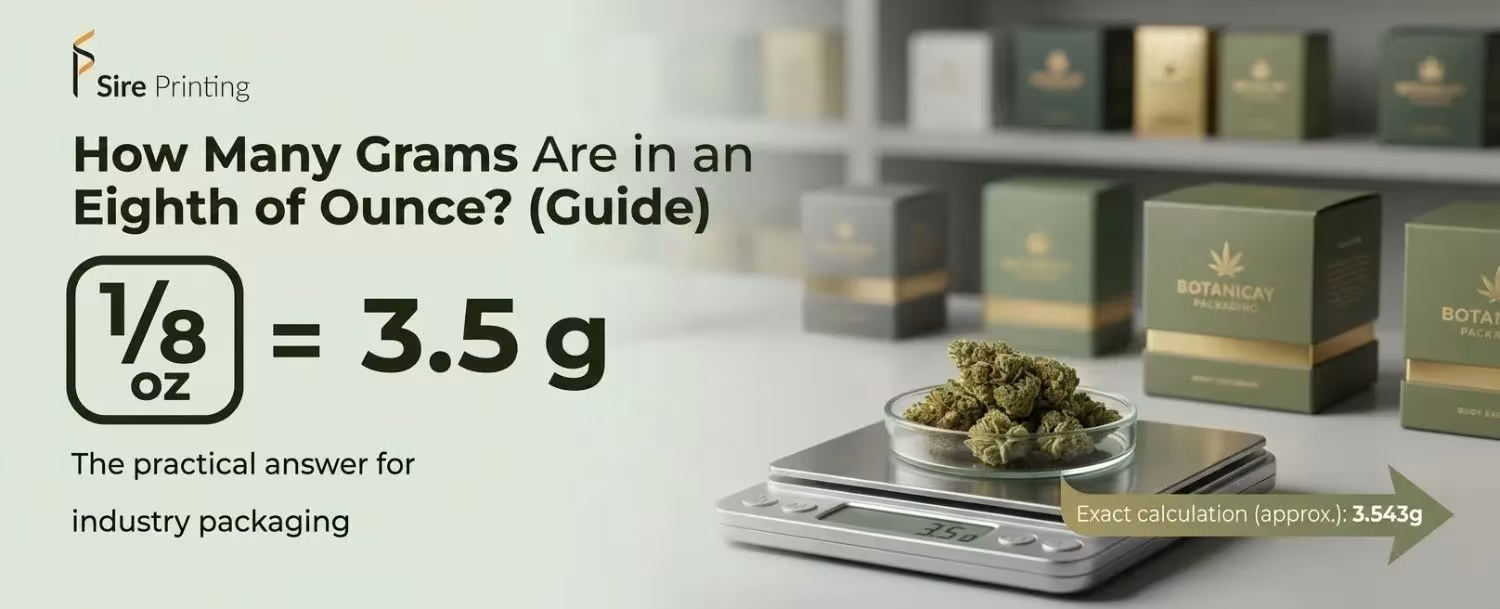
An eighth of an ounce equals 3.5 grams. That's the number most people searching how many grams are in an eighth of an ounce are looking for, and it's correct — but it's also a rounded figure, not the literal math. Understanding where that 3.5 comes from, why it gets rounded, and how it plays out in real purchases and real packaging is what actually helps you use the number correctly instead of just repeating it.
|
|
The Math Behind the Conversion
The ounce used for weighing flower, food, and most everyday dry goods in the U.S. is the avoirdupois ounce — not the troy ounce, which is reserved for precious metals like gold and silver and equals a different weight entirely. One avoirdupois ounce is 28.3495 grams, an internationally standardized figure that doesn't change based on what's being weighed.
Divide 28.3495 by eight, and the exact answer is 3.543 grams. That's the true weight of an eighth of an ounce, decimal points included. So when someone asks how many grams in an eighth of an ounce, the technically precise answer is 3.543 — but almost nobody buys, sells, or packages product using four decimal places.
The practical, working answer to how many grams in a 8th of an ounce is 3.5 grams. That figure is used at checkout counters, on product labels, and in packaging specs across the industry, and it's close enough to the exact math that the difference is functionally invisible on a standard scale.
A Complete Fractional Ounce to Gram Conversion Chart
Once you know how an eighth breaks down, the rest of the fractional scale follows the same rounding logic — each step is roughly double the last, rounded to a number a standard scale can actually display.
|
|
|
|
|
|
|
|
|
|
|
|
|
|
|
|
|
|
Every figure above is the rounded, industry-standard weight — the same convention that makes 3.5 grams the accepted answer for an eighth.
Why the Number Gets Rounded
Rounding 3.543 down to 3.5 isn't laziness, it's practicality. Most consumer and commercial digital scales read to the nearest 0.1 gram, which means a figure like 3.543 can't even be displayed accurately on the equipment most buyers and sellers actually use.
Rounding to 3.5 also creates a number that's easy to verify, repeat, and compare across transactions. If every eighth were expected to weigh exactly 3.543 grams, buyers would flag correctly functioning scales as inaccurate simply because they can't resolve that level of precision.
The rounded figure is the one the entire retail chain — growers, dispensaries, and packaging suppliers — has agreed to work from, which is what makes it the standard rather than an approximation of convenience.
Cost-Per-Gram: Why This Number Matters When Buying
Once you know the base conversion, the real value shows up in how it's used. Comparing prices across different package sizes only works if you're comparing the same unit, and grams are that common denominator.
For example, a $40 eighth and a $150 ounce sound like different price points, but converting both to cost-per-gram tells the real story: the eighth costs about $11.43 per gram, while the ounce costs $5.36 per gram.
Buying in bulk runs nearly half the price per gram, a gap that's invisible if you compare sticker prices instead of underlying weight. This is the same math buyers use when comparing subscription or mail-order sizing across different vendors, many of which ship products in Custom Mailer Boxes built around these same fractional-ounce weights.
Getting an Accurate Measurement
A scale that isn't properly calibrated is the single biggest source of confusion around eighth-ounce measurements — not bad math, but bad equipment. Even a small calibration drift compounds every time you compare one purchase to the next.
The most common measurement mistakes are avoidable once you know to look for them, especially when weighing anything close to 1/8th oz:

● Confusing an eighth of an ounce with an eighth of a pound — a difference of nearly 50 grams, not a rounding error
● Weighing product while it's still in its container instead of tearing the scale to zero first
● Skipping calibration checks against a certified reference weight
● Assuming every "eighth" sold in the retail market weighs precisely 3.5 grams rather than an accepted average
Testing a scale against a known reference weight every few weeks is a small habit that prevents most of these issues before they affect a purchase.
What This Means for Packaging
For a packaging manufacturer, 3.5 grams isn't only a buyer's reference point — it's a physical design constraint. A container needs enough internal volume to hold the flower without crushing it, but not so much that the product looks short-filled sitting inside.
This shows up most clearly in Pre Roll Packaging, where the container's shape and volume are dictated almost entirely by the product's actual weight rather than by a fixed industry default.
A box sized for a single pre-roll looks noticeably different from one built to hold an eighth's worth of loose flower, and getting that sizing wrong either wastes material or makes the product look under-filled on a shelf — a detail that affects a buyer's trust before they've even opened the package.
Frequently Asked Questions
How many grams are in an eighth of an ounce?
An eighth of an ounce is 3.5 grams in practice, based on the rounded conversion from the exact figure of 3.543 grams.
How much is 28 grams?
Twenty-eight grams is the rounded weight of one full ounce, often called a "zip" in everyday conversation.
What's the difference between an avoirdupois ounce and a troy ounce?
The avoirdupois ounce (28.3495 grams) is used for everyday dry goods, while the troy ounce (31.1 grams) applies specifically to precious metals like gold and silver.
Why isn't an eighth exactly 3.543 grams in real transactions?
Standard digital scales read to the nearest tenth of a gram, so the trade rounds to 3.5 grams for consistency and easier verification.
How do I know if my scale is measuring correctly?
Testing it against a certified reference weight on a regular basis catches drift before it affects a purchase or a packaging fill-line.
Final Thoughts
How many grams are in an eighth of an ounce comes down to one number — 3.5 grams, rounded from the exact 3.543-gram calculation. But the number alone doesn't explain why it's the accepted standard, how measurement errors creep in, or why it matters for anything beyond a single purchase.
At Sire Printing, we design Custom Packaging Boxes around exactly this kind of detail, because packaging built for 3.5 grams should actually look and perform like it holds 3.5 grams — not an approximation of it.
|
|
|
|