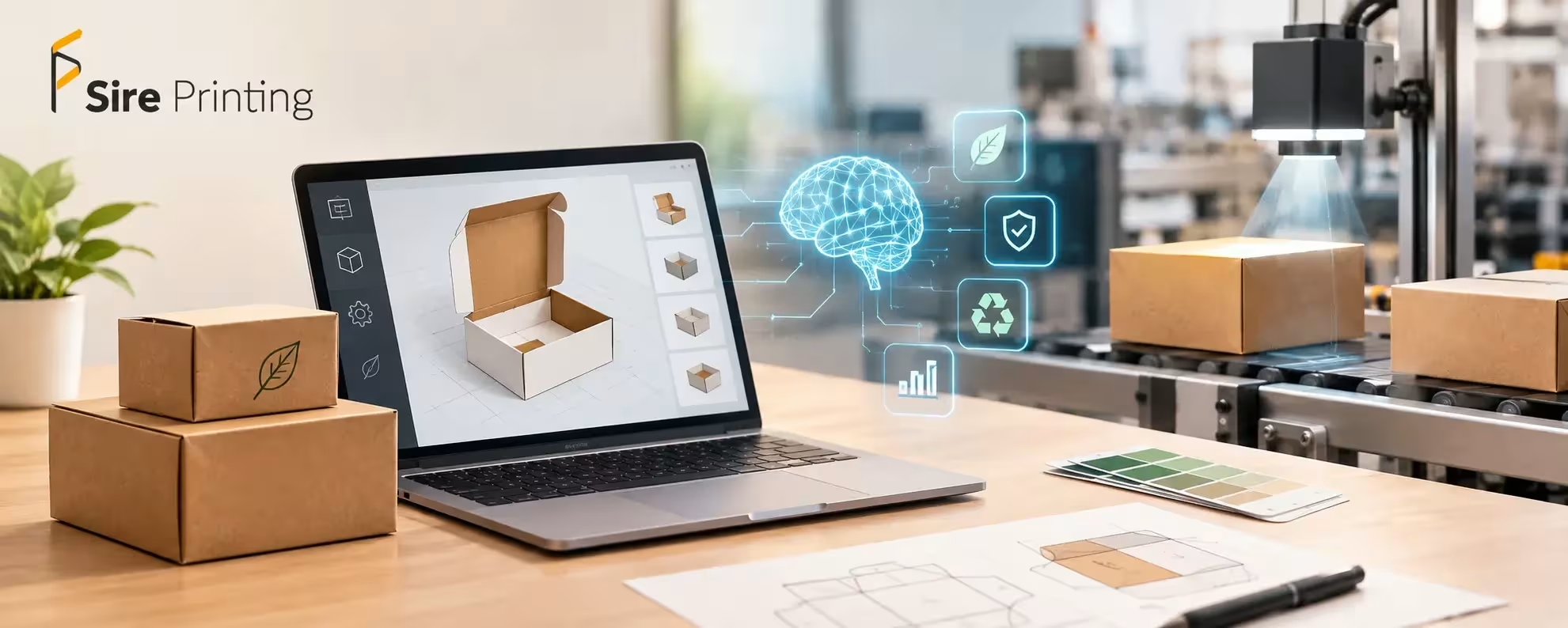
At Sire Printing, we don't just watch packaging trends — we build boxes inside them every day. Here's what artificial intelligence is actually doing to this industry, minus the hype.
Artificial intelligence is transforming the packaging industry by optimizing material usage, automating quality checks, and enabling smarter, faster design. The result: less waste, fewer defects, and packaging that reaches shelves quicker than ever before.
That's the short answer. Here's the full picture — what's changing, why it matters, and what it means for your next packaging order.
Why This Shift Is Happening Now
The AI-in-packaging market isn't a future prediction — it's already here. Industry reports place the sector's growth at over 10% annually, with adoption accelerating as costs drop and tools become more accessible to businesses of every size, not just billion-dollar manufacturers. PACK EXPO's 2026 industry report specifically pointed to AI's growing role in predictive maintenance, regulatory compliance, and knowledge-sharing across packaging operations.
In plain terms: what used to require a large in-house engineering team can now be done faster, cheaper, and with fewer errors — by AI systems working alongside human designers and production teams.
Smarter Design, Built From Data — Not Guesswork
Packaging design used to lean heavily on intuition. A designer sketched, a sample was cut, and the team hoped it worked. AI-powered generative design software has flipped that process.
Tools like Pacdora and Midjourney now let brands generate multiple structural mock-ups and 3D prototypes in minutes, not weeks. These systems analyze the product's shape, weight, and fragility to recommend the lightest structure that still protects it fully — cutting material use before a single box is printed.
This isn't about replacing designers. It's about giving them a faster starting point, backed by data on what actually holds up in shipping and on shelves.
Catching Defects Before They Ship
Quality control is where AI has made some of its most measurable impact. Computer vision systems now scan packaging lines in real time, flagging misprints, incorrect fill levels, or structural inconsistencies with a level of consistency human inspection can't match at high volume.
What this looks like in practice:
- Cameras trained on thousands of reference images spot a flaw in milliseconds
- Faulty units get pulled before they reach a warehouse, not after a customer complaint
- Production teams get real-time data instead of end-of-shift reports
Predictive maintenance follows the same logic. Sensors on packaging equipment track vibration, temperature, and wear patterns, flagging a machine before it fails — not after a costly line shutdown.
Sustainability Gets a Data-Driven Upgrade

For years, "eco-friendly" packaging meant swapping one material for another and hoping for the best. AI is making that decision far more precise.
Machine learning models now evaluate a material's full environmental footprint — sourcing, weight, recyclability — before it's ever used in production. That's helped push brands toward genuinely biodegradable packaging options instead of materials that are eco-friendly in name only.
The bigger shift is happening in recycling itself. AI-powered robotic sorting systems can now identify and separate recyclable materials at a speed and accuracy manual sorting simply can't reach, cutting down on contamination that used to send entire batches to landfill instead of back into circulation.
Personalization at a Scale That Used to Be Impossible
Small-batch, brand-specific packaging used to come with a steep price tag. AI-assisted production has narrowed that gap significantly.
A skincare brand can now order a short run of custom retail packaging with a design tailored to a single product launch, without the cost penalty that once made short runs impractical. The same shift is happening across food, cosmetics, and even regulated categories like CBD, where compliant, branded packaging can be produced in smaller, more flexible batches than ever before.
For growing businesses, this means packaging can finally scale with the brand — not force the brand to scale around packaging minimums.
Supply Chains That React Before Problems Hit
Demand forecasting used to mean looking at last year's numbers and hoping this year behaves the same way. AI models now process live sales data, seasonal patterns, and even shipping conditions to predict demand shifts before they cause a stockout or overproduction.
On the logistics side, route optimization powered by AI is trimming unnecessary mileage from shipping networks — a change that cuts both cost and transportation emissions at the same time.
AI vs. Traditional Packaging: A Quick Comparison
|
|
|
|
|
|
|
|
|
|
|
|
|
|
|
|
|
|
|
|
|
|
|
|
|
|
|
|
Where AI Still Falls Short
Honest take: AI isn't a plug-and-play fix for every packaging business. Implementation costs remain a real barrier for smaller operations, and these systems still need trained people to interpret results and step in when something looks off. A defect-detection camera can flag a problem — it can't decide how to fix your production line.
The businesses seeing the best results are treating AI as a tool that supports experienced teams, not one that replaces them.
What This Means for Your Business
If you're choosing a packaging partner in 2026, the question isn't "do they use AI." It's whether they use it in ways that actually benefit your order — tighter quality control, smarter material choices, and faster turnaround without cutting corners on craftsmanship.
Technology can optimize a lot of the process. But packaging that genuinely represents your brand still comes down to experienced people making the right calls — from custom packaging boxes to premium finishes that a screen can't fully judge on its own.
Frequently Asked Questions
Will AI replace packaging designers?
No. AI speeds up prototyping and handles repetitive analysis, but final design decisions — brand feel, market positioning, creative direction — still rely on human designers.
Is AI-driven packaging more expensive?
Not necessarily. While initial technology investment has a cost, AI often lowers material waste and defect rates, which can reduce overall production costs over time.
Which industries benefit most from AI in packaging?
Food and beverage, cosmetics, and e-commerce see some of the biggest gains, thanks to high production volumes and strict quality or freshness requirements.
Does AI make packaging more sustainable?
It's helping. AI improves material selection accuracy and recycling sorting, though sustainability outcomes still depend on the materials and processes a company chooses to invest in.
Do small businesses have access to AI-powered packaging?
Increasingly, yes. Costs have dropped enough that even smaller packaging runs can benefit from AI-assisted design and quality checks, not just large manufacturers.
The Bottom Line
AI is changing how packaging gets designed, inspected, and shipped — but it's changing the process, not the purpose. Packaging still has one job: protect the product and represent the brand well. AI just helps get there faster, with less waste and fewer costly mistakes.
If you're ready to work with a packaging partner who blends smart technology with real craftsmanship, we're one call away.
|
|