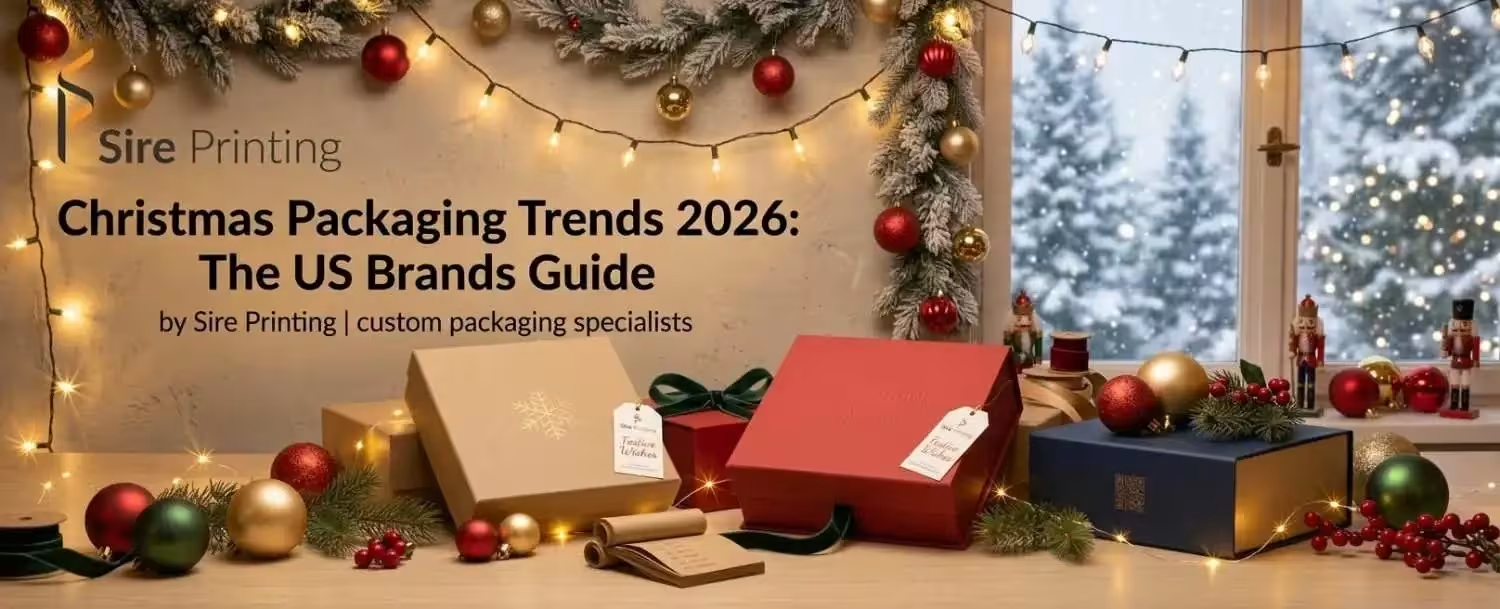
Christmas Packaging Trends 2026: What US Brands Need on Their Shelves This Season
By Sire Printing — Custom Packaging Specialists for US Brands | sire Printing
|
|
Peak season planning for Christmas 2026 starts now — not in October. If you're a US brand manager, retail buyer, or DTC founder, the decisions you make on packaging this quarter will define your shelf presence, your unboxing moments, and ultimately, your Q4 revenue. The window between concept and delivery is tighter than most brands expect. Festive packaging design isn't a last-minute detail; it's a strategic brand asset.
At Sire Printing, we've produced seasonal packaging for brands across the US — from boutique subscription boxes to nationwide retail chains. What follows is our honest, hands-on read of where holiday packaging trends are heading in 2026 and what your brand actually needs to act on.
|
|
Christmas Packaging: The Season's Most Powerful Brand Touchpoint
The holiday season accounts for nearly 20–30% of annual retail sales for many US consumer brands — and packaging is, quite often, the very first physical interaction a customer has with your product. Before they read a label, before they open a box, they feel the weight, see the color, and make a snap judgment about value.
Human psychology during the holidays is wired differently. Shoppers are in a gift-first mindset — emotionally primed, nostalgic, and willing to pay more when the presentation signals thoughtfulness. Festive packaging design that taps into that emotional register doesn't just look good. It sells.
This is also, paradoxically, the highest-waste period of the year — which means consumer scrutiny of holiday packaging trends around sustainability is at an all-time high. Brands that get this balance right — beautiful AND responsible earn loyalty that outlasts the season.
Sustainable Christmas Packaging Takes the Lead in 2026

This is no longer a niche preference. A 2024 McKinsey study found that over 60% of US consumers actively check recyclability claims on packaging before purchase — a figure that spikes during the holiday season when guilt around waste is heightened. For Christmas 2026, sustainability isn't a badge; it's a baseline.
The materials making the most impact right now: kraft paper (unbleached, recyclable, and visually warm), soy-based inks that reduce VOC emissions without compromising print vibrancy, and biodegradable void fill replacing foam peanuts that most curbside programs won't accept.
When Sustainable Packaging Is Cost-Effective — and When It Isn't
Kraft mailers and recycled-stock folding cartons are cost-competitive with conventional alternatives at most order volumes. Where cost rises is in certified compostable films and FSC-certified rigid boxes — these add 15–25% to unit price but command a proportional premium perception.
The smarter play for most mid-size US brands: eco-elegance — recyclable kraft with a foil-stamped logo and spot UV detail. You get the sustainability signal and the luxury feel without the cost of fully compostable structures. Be specific with your labeling too: "100% Recyclable" outperforms vague language like "eco-friendly" in US consumer trust studies.
|
|
Texture and Unboxing: Why Feel Matters as Much as the Visual
In an era of endless digital scrolling, physical packaging is one of the few remaining truly sensory brand moments. And for Christmas 2026, tactile packaging is the single biggest differentiator between a box that gets photographed and shared — and one that gets recycled without a second thought.
The Finishes Commanding Attention Right Now
● Soft-touch velvet lamination — matte, velvety, and instantly perceived as premium
● Foil stamping — gold or silver metallic logos that catch light and signal luxury
● Spot UV — high-gloss sections over a matte base for a dramatic contrast effect
● Embossing and debossing — raised or recessed logos that beg to be touched
The practical trade-off worth knowing: textured finishes add 3–7 business days to production timelines compared to standard litho-printed boxes, and they increase unit cost by roughly 20–35%. For Christmas packaging, that's almost always worth it — the unboxing experience drives social sharing, which is organic marketing you can't buy.
Brands equate texture with quality at a subconscious level. In consumer testing, identical products packaged in soft-touch laminated boxes are consistently rated as higher quality and worth more than the same item in standard matte boxes. Perception IS value at the point of gift-giving.
Personalization and Variable-Data Printing at Scale
The rise of DTC brands and subscription box gifting has made personalization the most talked-about trend in seasonal packaging trends 2026.

But what most trend pieces miss is the practical reality: variable-data printing has made name, QR code, and city-specific customization accessible at volumes as low as 250–500 units.
For custom Christmas boxes, this means a gifting brand can print 500 boxes where 250 say "For Emma" and 250 say "For James" — without a plate change, without a cost multiplier, and with the same lead time as a standard run. Technology has caught up with the trend.
QR codes embedded in festive packaging design open a second channel: scan to reveal a personalized video message, unlock a discount for a repeat purchase, or register a product warranty. For DTC and subscription box brands, this loop between physical packaging and digital engagement is the 2026 edge worth chasing.
Limited-Edition Packaging: Scarcity That Sells
Collectible holiday packaging has historically been the domain of large CPG brands, think Coca-Cola's annual Christmas can or luxury beauty gift sets with bespoke seasonal boxes. But lower MOQs in 2025–2026 have democratized this strategy.
Short-run packaging enabled by digital offset and HP Indigo print technology now starts at 100–250 units for many box styles. That means a boutique candle brand, a craft spirits label, or a Shopify-native gift shop can run a limited-edition Christmas gift box design with a unique seasonal print, without committing to 2,000 units of a design that only works in December.
|
|
Interactive Packaging: QR Codes and AR — Beyond the Hype
Most coverage of interactive holiday packaging reads like a press release: "AR is transforming unboxing!" What it rarely tells you is what implementation actually costs or requires.
Here's the honest version. Adding a static QR code to a Christmas gift box costs essentially nothing — it's a print element like any other. The investment is in the destination: a landing page, a video, a personalized message builder. Budget $500–$2,000 for a basic QR-linked campaign page, or $0 if you link to an existing product or brand page.
AR Unboxing: Worth It for the Right Brand
Augmented reality experiences — where customers scan the box and a 3D animation or scene appears on their phone — are compelling and genuinely shareable. They're also a $5,000–$20,000+ development investment depending on complexity. For luxury gift packaging targeting a tech-forward demographic, the ROI case is strong. For a $15 product at mass retail, it isn't yet.
The middle ground: QR codes that link to short-form video content (a brand story, a "how to style this gift" clip, or a personalized holiday greeting) perform well across all price points and demographics, and they cost almost nothing to implement on top of an existing packaging order.
Color Direction and Design Themes for Christmas 2026
Classic red, green, and gold aren't going anywhere — and frankly, they're classic for a reason. Consumer research consistently shows that traditional Christmas palettes outperform "trend-forward" alternatives in gift purchase decisions, particularly in the $20–$75 price range.
What IS changing in 2026 is the approach to color as a system. The shift is from a single hero color to coordinated thematic sets — where the outer box, the tissue wrap, the gift tag, and the ribbon are all designed as one visual story.
Metallic accents (particularly warm gold and champagne silver) work across all of these touchpoints and signal premium intent without requiring a luxury price point.
Emerging palettes worth watching: deep forest green with champagne foil; midnight navy with gold star motifs; warm cream with burgundy and copper. These give brands a distinctive shelf identity while still reading unmistakably as Christmas.
Choosing the Right Packaging Approach for Your Business Size and Budget
This is the section most blog posts skip — and it's the most useful one. The right trend for your brand depends entirely on your order volume, your price point, and your customer's expectation. Here's a straightforward framework:
|
|
|
|
|
|
|
|
|
|
|
|
|
|
|
|
|
|
|
|
A DTC skincare brand doing 300 orders in December doesn't need a $4 rigid box with velvet laminate — they need a clean, well-printed kraft mailer with a hand-feel insert card. A luxury spirits brand doing 2,000 premium gift sets absolutely does need the rigid box with embossing. Match the finish to the expectation your price point already sets.
|
|
When to Order: Avoiding the Holiday Packaging Crunch
This is where the best packaging strategy falls apart. Brands choose the right design, the right finish, the right material — and then miss the window. For Christmas 2026, the US carrier peak season and port congestion forecasts make early ordering non-negotiable.
Realistic Order-by Windows for Christmas 2026 Delivery
● Standard printed boxes (no special finish): order by October 10
● Soft-touch lamination, foil stamping, spot UV: order by September 25
● Rigid boxes with embossing or custom inserts: order by September 15
● Variable-data / personalised runs: order by October 1
● Large volume orders (5,000+ units): plan for August–September submission
Most packaging suppliers — including Sire Printing — offer rush production for an additional fee, but rush does not guarantee quality at texture or finish level.
The minimum order quantity (MOQ) question is closely tied to lead time: lower MOQ digital runs are faster; higher MOQ offset runs need longer press and finishing schedules. Build your order window around your volume, not just your deadline.
For brands ordering Custom Christmas Boxes or Christmas Gift Boxes at scale, a pre-season conversation with your packaging partner — even in Q2 — is the single best investment you can make in a smooth Q4.
Frequently Asked Questions
How far in advance should I order Christmas packaging?
For standard boxes, 6–8 weeks ahead of your needed-by date is safe. For textured finishes like soft-touch lamination, foil stamping, or embossing, allow 8–10 weeks. For large-volume or rigid box orders, 10–12 weeks is the professional standard — especially with US carrier delays factored in for Q4.
What's the most cost-effective sustainable packaging option?
Recycled kraft boards with water-based or soy-based inks gives the strongest sustainability signal at the lowest price premium — typically only 5–10% above standard stock. It's printable, recyclable, and visually warm in a way that reads as intentional rather than budget-driven.
Can small brands do limited-edition packaging runs?
With digital offset printing now widely available, limited-edition Christmas packaging runs start at 100–250 units for most box styles. Short-run doesn't mean compromised quality — it means faster turnaround and lower inventory risk, which is actually ideal for seasonal packaging.
What packaging finish gives the most premium feel for the price?
Soft-touch velvet lamination over a matte-printed surface gives the highest perceived premium for its cost. It adds approximately 20–30% to base unit price but consistently shifts consumer quality perception more than any other single finish. If the budget allows only one upgrade, this is it.
Do QR codes or AR actually improve customer engagement?
QR codes linking to relevant content — a personalized message, a product story video, a loyalty discount — show strong scan rates when printed prominently on packaging (typically 8–15% of recipients scan them). AR experiences generate higher engagement but require meaningful development investment to do well. For most brands, a well-executed QR strategy delivers better ROI in 2026.
Plan for Christmas 2026 Packaging While the Window Is Still Open
The brands that win Christmas 2026 on shelf won't be the ones who reacted fastest in November. They'll be the ones who made deliberate choices in Q3 — about sustainability signals, about texture and finish, about whether a limited-edition run makes sense for their SKU mix.
Christmas packaging trends 2026 point in one direction: packaging that works harder. Harder at communicating values (sustainability), harder at triggering emotion (texture, unboxing theater), and harder at driving repeat behavior (personalization, QR engagement).
The good news is that none of these trends require a massive budget — they require smart specification and the right production partner.
At Sire Printing, we work with US brands across every size and category to get seasonal packaging right the first time. Whether you need 150 custom Christmas boxes for a boutique launch or 10,000 gift sets for a national retail campaign, we bring the expertise and the honesty your brand deserves.
|
|