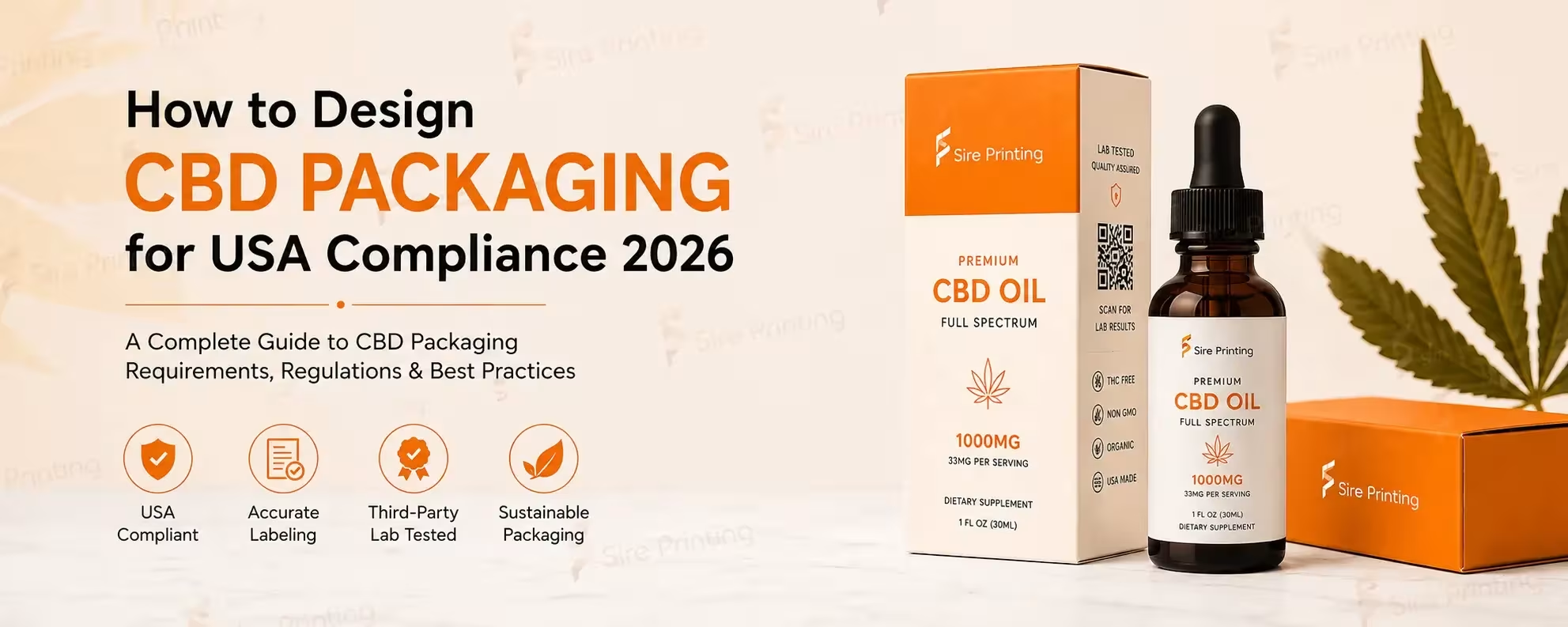
Introduction
If you are selling CBD products in the United States in 2026, your packaging is no longer just a container — it is a legal document. Regulators at the federal and state level are scrutinising CBD labels more aggressively than ever, and the cost of non-compliance has risen sharply. Product recalls, retail rejections, and FTC warning letters are real outcomes for brands that treat packaging as an afterthought.
This guide covers everything your CBD packaging must include under current USA law, including the major 2026 regulatory updates that many brands have not yet addressed. If you are launching a new product line or auditing existing custom CBD boxes, this resource gives you a clear, actionable compliance checklist.
What Has Changed in 2026: Key Regulatory Updates
Before reviewing standard requirements, brands must understand what is new in 2026. Several significant shifts have occurred since 2024 that directly affect packaging decisions.
1. Proposed 0.4mg Total THC Cap Per Retail Container
One of the most consequential proposed changes heading into late 2026 is a federal cap of 0.4mg total THC per retail container for finished hemp-derived consumer products. This would affect a wide range of full-spectrum and broad-spectrum CBD products currently on the market.
Brands sourcing or producing products with higher total THC levels should monitor this proposal closely. Packaging printed in advance of a final rule may require revision if the cap is enacted.
2. FDA and FTC Enforcement Is Accelerating
The FDA continues to issue warning letters to CBD brands making unauthorised health claims on labels and websites. The FTC has increased scrutiny of advertising language that mirrors medical claims. In 2026, enforcement extends beyond product labels to QR-linked digital content — meaning your Certificate of Analysis landing page and any linked marketing material must also avoid prohibited claims.
3. State-Level QR Code and COA Mandates Are Expanding
Multiple states now require CBD packaging to include a QR code that links directly to a batch-specific Certificate of Analysis (COA). This is no longer optional best practice — it is a statutory requirement in a growing number of markets. Brands selling nationally must treat QR-linked COA access as mandatory.
4. Child-Resistant Packaging Standards Have Tightened
Several states now require dual-layer child-resistant protection — for example, a child-resistant container placed inside a child-resistant outer bag or carton. Certification must come from an independent laboratory such as Intertek or SGS. Self-declared "child-resistant" claims without third-party certification are no longer acceptable in these markets.
Federal CBD Labeling Requirements: What Every Package Must Include
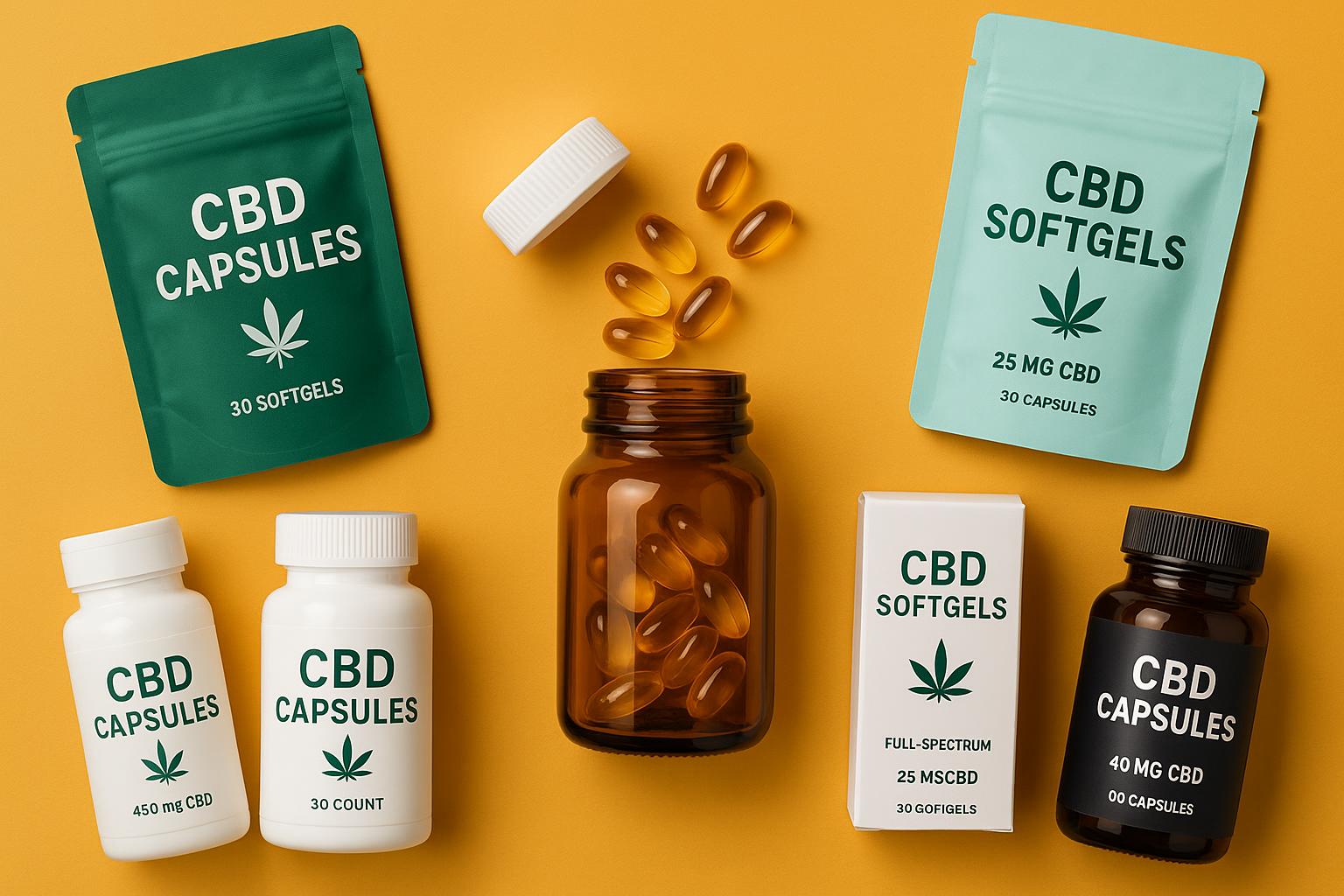
Regardless of which state your product is sold in, the following information is required on all compliant CBD packaging under federal guidelines.
Product Identity
The package must clearly identify what the product is. Customers should immediately understand whether they are buying CBD oil, gummies, capsules, topicals, beverages, or pet supplements. Ambiguous product names that obscure the product type are a compliance risk.
Net Quantity of Contents
The net quantity must be displayed on the principal display panel (PDP) in both metric and US customary units where applicable. For CBD products, this typically means stating the total volume (ml or fl oz) alongside the total CBD content in milligrams.
Total CBD and Cannabinoid Content
Labels must disclose the total CBD content consistent with laboratory results. This figure should match the Certificate of Analysis for that specific batch. Overstating potency — even unintentionally — is a serious compliance violation that has triggered multiple FDA warning letters.
For full-spectrum products, total THC content should also be disclosed. Given the proposed 0.4mg THC cap, proactive disclosure strengthens your compliance position.
Complete Ingredient Declaration
A full ingredient list is required for consumable and topical CBD products. Ingredients must be listed in descending order of predominance by weight, using common or usual names. This is especially important for products containing allergens, artificial additives, or animal-derived ingredients.
Name and Address of Responsible Party
The manufacturer, packer, or distributor's name and principal place of business must appear on the package. A full address or at minimum a city, state, and ZIP code is required.
Batch or Lot Number
Every CBD package must carry a traceable batch or lot number. This supports product recalls, consumer inquiries, and regulatory audits. The batch number should correspond directly to the COA available via your QR code.
Expiration or Best-By Date
Shelf-life dating is required or strongly recommended depending on product format. Consumable products in particular must carry a best-by date that reflects accurate stability testing data.
QR Code Linking to Certificate of Analysis
While federally encouraged rather than universally mandated, QR codes linking to third-party lab results are now a de-facto requirement for any brand selling through major retail channels. Many retailers will not stock CBD products without accessible, batch-specific COA data.
The COA should verify:
- CBD potency
- Full cannabinoid profile
- Heavy metals screening
- Pesticide residue testing
- Microbial contamination analysis
- Residual solvent testing
Mandatory Warnings
Depending on product type and target state, required warnings may include:
- "Keep out of reach of children"
- "Do not use if pregnant or nursing"
- Age restriction warnings (21+ in some states)
- "This product has not been evaluated by the FDA"
- "This product is not intended to diagnose, treat, cure, or prevent any disease"
This last warning — commonly called the DSHEA disclaimer — is critical. Any product that includes structure/function language without this disclaimer is in violation of FDA guidelines.
Child-Resistant Packaging: 2026 Standards
Child-resistant packaging requirements have become more rigorous across the United States. The Poison Prevention Packaging Act (PPPA) provides the federal foundation, but state laws now go further.
Certification Requirements
Packaging described as child-resistant must be tested and certified by an accredited independent laboratory. Recognised certifiers include Intertek and SGS. Brands that print "child-resistant" on packaging without formal certification expose themselves to regulatory and liability risk.
Dual-Layer Protection
Several state cannabis and hemp programs now mandate dual-layer child-resistant protection for products that resemble food, candy, or beverages. This typically requires:
- A child-resistant primary container (bottle, jar, or pouch with a CR closure)
- A child-resistant secondary carton or outer packaging
If your product is sold in states with dual-layer requirements, your custom CBD packaging boxes must be designed to meet both layers simultaneously.
Resealable CR Closures
Products intended for multiple uses — such as CBD oils, tinctures, and gummy pouches — must re-close with the same child-resistant mechanism after opening. Push-and-turn caps, safety-lock closures, and certified CR zipper pouches are common compliant solutions.
What You Cannot Put on CBD Packaging

Understanding prohibited content is as important as understanding what is required.
No Disease Claims
Packaging must not state or imply that a CBD product can diagnose, cure, treat, or prevent any disease or medical condition. This prohibition covers:
- Direct claims ("Treats anxiety," "Relieves arthritis pain")
- Implied claims ("Supports healthy inflammation response" used in a clinical context)
- Testimonials referencing disease outcomes
- Before-and-after imagery suggesting medical results
The FTC has made clear that this prohibition extends to digital content linked from packaging, including QR code destinations and social media profiles referenced on labels.
No Misleading Potency Claims
The stated CBD content must be accurate within acceptable variance thresholds. Products that test materially lower than labelled potency are subject to enforcement action and retail removal.
No Misleading "Natural" or "Organic" Claims
Claims such as "100% natural," "organic," or "pure" must be substantiated. USDA Organic certification is required to use the certified organic seal. Unsubstantiated purity claims are an FTC enforcement target.
State-Specific Considerations
CBD packaging compliance is not a single standard. Brands selling nationally must design packaging that meets the strictest requirements of every state in their distribution network.
Key state-level variation areas include:
- QR code COA mandates (required by law in several states, best practice nationally)
- Age restriction warnings (18+ or 21+ depending on state and product type)
- THC content disclosure thresholds
- Dual child-resistant packaging requirements
- Specific warning language formats and font size minimums
The most protective approach is to design packaging to meet the most stringent requirements across all target states simultaneously. This avoids the cost of producing state-specific label variants.
Designing CBD Packaging That Converts and Complies
Compliant packaging does not have to be visually unappealing. The strongest CBD brands in 2026 treat packaging design as a trust-building asset, not just a legal checkbox.
Visual Hierarchy That Supports Compliance
Organise label information so that required elements are easy to find without dominating the design. A practical hierarchy:
- Product name and type (dominant)
- CBD strength in milligrams (prominent)
- Net quantity
- QR code (accessible but not distracting)
- Full compliance text (legible, not buried)
Typography and Legibility
Regulatory bodies specify minimum font sizes for certain label elements. As a general rule, no required text should appear smaller than 6pt on primary panels. Warning text typically requires a minimum of 1/16 inch in height for the smallest letter.
Material Selection for Compliance and Quality
Premium materials reinforce brand credibility while meeting structural requirements:
- Kraft paperboard — eco-friendly, widely used for gummies and capsule cartons
- Rigid boxes — premium positioning for high-potency tinctures and gift sets
- Matte laminate cartons — professional finish with room for full compliance text
- Child-resistant cartons with tuck locks — dual-function compliance and protection
Sustainability and CBD Packaging in 2026
Environmental standards are increasingly influencing both consumer purchasing decisions and retailer stocking policies.
Over 70% of US consumers report that eco-friendly packaging is an important factor in their buying decisions. For CBD brands, this creates a direct commercial incentive to invest in sustainable packaging alongside compliance.
Compliant sustainable options include:
- FSC-certified paperboard — verified responsible sourcing
- Soy-based inks — reduced VOC impact
- Recyclable mono-material structures — avoids mixed-material recycling issues
- Biodegradable child-resistant pouches — available from specialist suppliers
Sustainable packaging choices should be communicated clearly on the package itself, using only claims that can be substantiated.
Custom CBD Boxes for E-Commerce: Additional Requirements
Products sold online and shipped directly to consumers face additional packaging considerations beyond in-store compliance.
Transit Protection
CBD oils, tinctures, and glass containers require secondary protective packaging to prevent damage during shipping. This typically includes:
- Foam or cardboard inserts to immobilise bottles
- Reinforced outer cartons with minimum 32 ECT corrugated fluting
- Tamper-evident seals applied before despatch
Tamper-Evidence
Tamper-evident packaging is essential for consumable CBD products sold direct-to-consumer. Acceptable mechanisms include shrink bands, induction seals, breakaway caps, and perforated carton closures. The tamper-evident element should be clearly visible and should include wording such as "Do not use if seal is broken."
Unboxing and Customer Experience
A positive unboxing experience increases repeat purchase rates and social sharing. Practical enhancements that add value without inflating costs include:
- Branded tissue paper or inner wrap
- Printed insert cards with usage instructions and COA QR code
- Consistent brand identity across all internal and external surfaces
CBD Packaging Compliance Checklist for 2026
Use this checklist before finalising any CBD packaging for the US market.
Required Label Elements
- Product identity clearly stated
- Total CBD content in milligrams
- Full ingredient list in descending order
- Net quantity of contents
- Manufacturer or responsible party name and address
- Batch or lot number
- Expiration or best-by date
- QR code linking to batch-specific COA
- DSHEA disclaimer (where structure/function claims are used)
- All applicable state-required warnings
Structural Requirements
- Child-resistant closure certified by accredited lab (Intertek, SGS, or equivalent)
- Dual-layer CR packaging where required by target state
- Tamper-evident seal
- Minimum font size compliance for all required text
Prohibited Content Audit
- No disease treatment or cure claims
- No unsubstantiated natural/organic claims
- No misleading potency claims
- QR-linked digital content reviewed for prohibited claims
2026-Specific Checks
- Total THC content disclosed for full-spectrum products
- Packaging reviewed against proposed 0.4mg THC per container cap
- State QR code COA mandates verified for all target markets
Frequently Asked Questions
What must be included on CBD packaging in the USA in 2026?
CBD packaging must include product identity, total CBD content, full ingredient list, net quantity, manufacturer name and address, batch number, expiration date, a QR code linking to a third-party COA, and all applicable warnings including the DSHEA disclaimer where relevant.
Is child-resistant packaging required for all CBD products?
Requirements vary by state and product type. Products resembling food or candy face the strictest standards. Several states now require dual-layer child-resistant protection. All child-resistant packaging must be certified by an accredited independent laboratory.
Can CBD packaging make health claims?
No. Packaging must not claim that a product diagnoses, treats, cures, or prevents any disease. Structure/function claims must be accompanied by the DSHEA disclaimer and must not imply medical outcomes. FTC enforcement covers digital content linked from packaging.
What is the 0.4mg THC cap and how does it affect packaging?
A proposed federal regulation would limit finished hemp-derived consumer products to 0.4mg total THC per retail container. This proposal is under review as of mid-2026. Brands should monitor its progress and ensure total THC content is disclosed on packaging for all full-spectrum products.
Why is a QR code important on CBD packaging?
A QR code provides consumers and retailers with direct access to batch-specific laboratory test results. It verifies potency, screens for contaminants, and demonstrates brand transparency. Several states now mandate QR-linked COA access by law.
What are the font size requirements for CBD labels?
While requirements vary by state, no required compliance text should appear smaller than 6pt. Warning statements typically require a minimum letter height of 1/16 inch. Text must be legible against its background contrast.
Does sustainable packaging meet compliance requirements?
Yes. FSC-certified paperboard, soy-based inks, and recyclable mono-material structures can all be designed to meet full compliance requirements. Sustainability claims on packaging must be substantiated and accurate.